Wednesday, July 08, 2009

Bury the Never Ending Myth of Jackson as Child Molester


Earl Ofari Hutchinson

Websites, blogs and chatrooms pulsed with garish cracks about it. Legions of commentators and news reporters snuck it in every chance they got. More than a few of Michael Jackson’s fervent admirers and supporters made a dismissive reference to it. Even President Barack Obama in a cautious acknowledgement of Jackson’s towering contributions to American music and artistry still made reference to the “tragedy” in Jackson’s life which was a subtle nod to it. And New York Congressman Pete King skipped the niceties and flatly said it.
The “it” is the never ending myth of Jackson the child molester. It still hangs as a damning indictment that feeds the gossip mills and gives an arsenal of ammunition to Jackson detractors. This is not a small point. In the coming weeks, there will be a push to bestow official commemorative monuments, honors on and a national stamp for Jackson. The taint of scandal could doom these efforts to permanently memorialize Jackson.
The child molester myth doesn’t rest on Jackson’s trial and clean acquittal on multiple child abuse charges in a Santa Maria courthouse in June 2005. Only the most rabid Jackson loathers still finger point to that to taint Jackson. The myth of Jackson as child abuser rests squarely on the charge by a 13 year old boy a decade before the trial and the multi-million dollar settlement out of court. The settlement, then and now, feeds the suspicion that Jackson must have done something unsavory and probably criminal, or else why settle?

16 years later, though, the facts remain unchanged. The charge that Jackson molested the boy was brought by the boy’s father. In interviews the boy repeatedly denied the charges. This changed only after he was administered sodium amytal, an invasive, mind altering drug that medical experts have frowned on and courts have disregarded in witness testimony. Prosecutors, police departments and investigators in Los Angeles and Santa Barbara spent millions of dollars, convened two grand juries and probed nearly 200 witnesses that included 30 children, who knew Jackson to try to substantiate the charge. Not a single corroborating witness was found. Nonetheless, a motley group of disgruntled Jackson’s former housekeepers, attendants and bodyguards still peddled the story to any media outlet willing to shell out the cash that Jackson had engaged in child sexual wrongdoing. Not one of the charges was confirmed. Typical was this exchange between one of Jackson’s attorneys and one of the accusing bodyguards under oath:

“So you don’t know anything about Mr. Jackson and [the boy], do you?”
“All I know is from the sworn documents that other people have sworn to.”
“But other than what someone else may have said, you have no firsthand knowledge about Mr. Jackson and [the boy], do you?”
“That’s correct.”
“Have you spoken to a child who has ever told you that Mr. Jackson did anything improper with the child?”
“No.”
“Where did you get your impressions about Jackson’s behavior?”
“Just what I’ve been hearing in the media and what I’ve experienced with my own eyes.”
“Okay. That’s the point. You experienced nothing with your own eyes, did you?”
“That’s right, nothing.”

When asked at the time about the charges against Jackson, child behavior experts and psychiatrists nearly all agreed that he did not fit the profile of a pedophile. They agreed that the disorder is progressive and there are generally not one but a trail of victims.

The myth of Jackson as child molester never hinged on evidence or testimony to substantiate it, but solely on the settlement. Why then did Jackson agree to it?
No charge stirs more disgust, revulsion, and pricks more emotional hot buttons than the charge of child molestation. The accusation stamps the Scarlet letter of doubt, suspicion, shame and guilt on the accused. The accused can never fully expunge it. There is simply no defense against it. Under the hyper intense media glare and spotlight that Jackson remained under, the allegation no mater how bogus would have been endless fodder for the public gossip mill. This would have wreaked irreparable damage on Jackson’s ever shifting musical career and personal life.
A trial in Los Angeles in the racially charged backdrop of the Rodney King beating, the L.A. riots, and pulsating racial tensions in the mid-1990s would have been risky business. A trial in staid, upscale, and majority white, Santa Barbara County would have been even more risky.
Jackson and his attorneys knew that when it came to the charge of child molestation the presumption of innocence, or even actual innocence, is tossed out the window. Though Jackson did nothing wrong, a trial would have left him, his reputation and his career in shambles. The settlement was the only pragmatic, logical and legal way to end the sordid issue.
The settlement under extreme duress must not sully his name and place as an honored American icon. The myth of Jackson as child molester must finally be buried.

Earl Ofari Hutchinson is an author and political analyst. His weekly radio show, “The Hutchinson Report” can be heard on weekly in Los Angeles on KTYM Radio 1460 AM and nationally on blogtalkradio.com

Sunday, July 05, 2009


Los Angeles Urban Policy Roundtable

July 6, 2009
for Immediate Release
Contact: Earl Ofari Hutchinson
323-383-6145
Press Advisory

Youth and Civil Rights Leaders Call on Jackson Memorial Ticket Winners to Give to Jackson Supported Causes


Leaders Will Announce the Organizations That Jackson Urged Donations For


A broad coalition of youth and civil rights leaders will publicly call on Jackson Memorial Ticket winners to donate to the list of needy organizations and social causes that Michael Jackson supported during his career. Jackson had an all consuming passion to aid and support programs and organizations that furthered human betterment. Toward that end Jackson gave tens of millions of dollars to social and children’s causes and charities.

“Jackson Memorial ticket holders can show their appreciation of Jackson’s monumental humanitarian work,” says Hutchinson, “By donating to the specific causes that Jackson held near and dear. This will be the best and most fitting way to celebrate and pay homage to the humanitarian spirit of giving and help that Jackson dedicated his life too.”

Los Angeles Urban Policy Roundtable

July 6, 2009
for Immediate Release
Contact: Earl Ofari Hutchinson
323-383-6145
Press Advisory:

Civil Rights Leaders Release List of Charities and Organizations Michael Jackson Aided


· Minority AIDS Project L.A.

· Angel Food

· Big Brothers of Greater Los Angeles

· BMI Foundation, Inc.— Support music education for gifted youngsters.

· Brotherhood Crusade

· Brothman Burn Center

· Camp Ronald McDonald

· Childhelp U.S.A. – Aims at meeting the needs of abused an neglected children—including education.

· Children’s Institute International

· Cities and Schools Scholarship Fund

· Community Youth Sports & Arts Foundation

· Congressional Black Caucus (CBC)

· Dakar Foundation

· Dreamstreet Kids

· Dreams Come True Charity

· Elizabeth Taylor Aids Foundation

· Juvenile Diabetes Foundation

· Love Match

· Make-A-Wish Foundation

· Minority Aids Project

· Motown Museum

· NAACP

· National Rainbow Coalition

· Rotary Club of Australia

· Society of Singers

· Starlight Foundation

· The Carter Center’s Atlanta Project

· The Sickle Cell Research Foundation

· Transafrica

· United Negro College Fund (UNCF)

· United Negro College Fund Ladder’s of Hope

· UNESCO—The proceeds of one of his tours went to the education of children in developing countries.

· Volunteers of America

· Watts Summer Festival

· Wish Granting

· YMCA – 28th Street/Crenshaw

Friday, July 03, 2009

Even the King of Pop Stirs Racial Divide


Earl Ofari Hutchinson


The first nasty inkling that even the King of Pop can stir the racial divide came with the the Mt. Everest size list of postings on blogs, chat rooms, and websites the week after the death of icon Michael Jackson. The comments ranged from mild rebuke to pure venom in which the writers dredged up all the old drug, child molestation, and other dirt digs on Jackson. In many cases they explicitly took big racial swipes at Jackson, papa Joe Jackson, and Jackson family members. Then there was the inevitable instant poll taken days after his death to measure just how popular Jackson really was with Americans.
A CNN poll found that a bare majority of Americans were thrilled by the Pop King. But as always buried in the numbers was the racial kicker. The overwhelming majority of African-Americans, Hispanics and Asians hailed Jackson. A decisive majority of whites, especially older whites, said that Jackson had no appeal to them. The age factor in the line in the sand on Jackson is to be expected. Though Jackson at the time of his death was uncomfortably ensconced as a middle-age pop star on the rebound, his music, dance and style appeal to the young and hip.

But age alone doesn’t explain the top heavy racial split. A majority of older blacks in informal surveys and interviews clearly like Jackson, if not solely for his music, for smashing musical and racial barriers in his artistry, in defying Sony and MTV and demanding top money and billing for his music, and for the role he played in opening the doors for other black artists. They remember a few years back when he marched on and picketed Sony with Al Sharpton in tow and his blasts at it as a racist institution. This tagged him in their eyes as a black man ready to challenge the corporate musical establishment. The snickers and wisecracks that Jackson had betrayed his racial roots by remaking himself as a whitish, cartoon caracture didn’t cut much ice with most blacks.
Jackson is no Mike Tyson, O.J. Simpson, or Michael Vick. There would never be a gaggle of sportswriters, talking head commentators, and pundits heaping every pejorative that they could think of on his head. Jackson’s innate sweetness, childlike innocence, vulnerability, and his big hearted charitable giving insulated him from that type of vilification. Yet, none of this is enough to obliterate the tint of race from Jackson.
There are some distinct markers that Jackson has beyond age and musical tastes that send a racial signal up. He lived an opulent and princely lifestyle. This always engenders grumbles and resentment in some quarters.There was a widespread rush to judgment during his child molestation trial that he was guilty of the terrible things that he was charged with. His clean and full acquittal didn’t totally wipe the smear away. And he is an African-American male.

This can’t be cavalierly shrugged off. The finger point at President Obama as the supreme example to refute any charge that black males are still routinely stereotyped, negatively typecast, and reviled is not a compelling argument that the old the racial myths have totally vanished. During and after the Presidential campaign, polls consistently showed that while Obama got a high likeability rating from a big majority of whites, many whites still clung tightly to the ancient negative, stereotypical fears of black males and strongly questioned their work ethnic and competence. Though Obama did soften the racial barrier when the final vote was in, he didn’t demolish it. The majority of whites still voted against him.
Jackson found out the hard way that at the first touch of legal taint that fan adulation, goodwill, and fame can vanish faster than a Houdini disappearing act. Long before he touched a toe in the courtroom, much of the old racial typecasting of black males when the allegation is a sexual crime quickly kicked in. The aquittal prompted more finger wags that Jackson was able to use his fame and name, and his A team, high priced attorneys to massage the legal system to skip away scot free.
While Jackson, unilike O.J. Simpson, was not a public pariah and polarizing figure, for a time he was damaged goods. The ill fated 50 city concert tour was a monumental risk and a gamble, given his tattered image.
Millions will hail Jackson at his public memorial tribute. They will continue to hail him for his enduring world class music and artistry. But sandwiched in between this some will continue to pick, probe and nag at him for his alleged drug use and addiction, and oddity. Jackson likely will never get a complete pass in death from the negative stuff. Sadly this comes with the turf when the racial divide inevitably rears its ugly head; even for the King of Pop.

Earl Ofari Hutchinson is an author and political analyst. His weekly radio show, “The Hutchinson Report” can be heard on weekly in Los Angeles on KTYM Radio 1460 AM and nationally on blogtalkradio.com

Saturday, June 27, 2009

The Terrible Plight of Dr. Conrad Murray


Earl Ofari Hutchinson


Dr. Conrad Murray can’t win. The Michael Jackson family through their surrogate Reverend Jesse Jackson hints that the doctor may have done something terribly wrong in the death of Jackson. Jackson fans were brutal. On the website vitals.com that rates physicians there were more than 100 comments (as of Saturday). The writers mostly railed against Murray as “Michael’s Killer.” What Murray did or didn’t do in the tragic hours before the fateful 911 call that brought the paramedics rushing to Jackson’s home is nothing but wild conjecture and speculation and grist for the tabloid mill.
Yet, that Murray finds himself on the medical and legal hot seat is no surprise. When things go wrong with their celebrity client-patients, doctors always feel the heat. Because invariably the things that go wrong deal with drug use, questionable medications and treatments that they allegedly give their ailing or troubled celebrity clients. The suspicion is always there that the doctors did something either negligent or unethical in catering to and indulging their clients real or imagined medical needs. The hunt to scapegoat the celebrity attendant doctor is then on with a vengeance. Their background, training, and experience are quickly called into question.
That’s the case with Murray. His training at Meharry Medical College School of Medicine, one of the oldest and most renowned black medical training facilities in Nashville, Tennessee, his internships, his years of experience and work as a cardiologist are under an intense microscope. The tons of money that Murray racked up in unpaid bills, and the liens and pending suits to get the money back have been dredged up to paint Murray as a doctor with a checkered and shady history.
The glare, however, is even more intense on Murray’s clinic, Global Cardiovascular Associates, main location in Las Vegas. In a call to the clinic, this writer was referred to a contact phone number to a doctor on call. The number was a pager beeper.

HealthGrades which rates America’s physicians based on their training, experience, patient responses, and quality of care, did not give Global Cardiovascular Associates a glowing four star rating. In the crucial area of patient care, there were six patient responses. They rated Global Cardiovascular on ease of scheduling appointments, office environment, cleanliness and comfort, office staff friendliness, and most importantly the wait time before seeing a physician. Murray’s three person staff rated only fair in the responses. Vitals. Inc. gave Global Cardiovascular a marginal rating on the critical areas of patient response time; follow up, and most importantly, accuracy of diagnosis. The clinic ranked below the national service average in a couple of these rated categories.
This is not damning proof that the clinic doses out substandard care, or is any way deficient in its medical practice. However, patients, medical rating boards and health care providers do place major emphasis on these as measures of patient care in decisions about the effectiveness and competence of physicians and their hospitals and clinics.
Even if Murray’s clinic had received a world class four star rating from the rating physician services, Murray or any other doctor who attended Jackson would still raise eyebrows even if they did everything by the book. It comes with the turf.
Heart related deaths account for more medical malpractice and wrongful death lawsuits than for any other medical problem. One survey found that they account for thirty percent of all dollars shelled out by doctors and insurers to settle malpractice suits.

Malpractice awards for heart attack typically allege misdiagnosis or mismanaged diagnostic methods or medical tests. Because the outcome of a misdiagnosed heart attack is obviously poorer than a rapidly treated heart attack, the patient may suffer severe consequences. This is the prime reason that the dollar award for heart attack malpractice cases is almost always much higher than the average payout for other alleged medical screw-up cases.
It may be that Murray did not do anything wrong in how he handled Jackson. But that won’t end things for Murray. He’ll likely be slapped with a lawsuit, or even multiple lawsuits. That’s been the lot of legions of other cardiologists. And possible lawsuits may be the least of his problems.
He will carry an even greater burden; and that’s the burden of being the doctor who was there when Jackson died. And everyone expects that doctors are supposed to save lives and not raise suspicions that they did something to end a live. It’s a terrible dilemma for any doctor. Dr. Murray is hardly the first to face it, but it’s one he'll have to live with.
Earl Ofari Hutchinson is an author and political analyst. His weekly radio show, “The Hutchinson Report” can be heard weekly in Los Angeles Fridays on KTYM Radio 1460 AM and live streamed nationally on ktym.com

Thursday, June 25, 2009

Remembering the Other Michael Jackson


Earl Ofari Hutchinson

Near the end of the first week of Michael Jackson’s infamous child molestation trial in 2005, a large group of African-American community activists and leaders gathered at a community center in Los Angeles to talk about Jackson, the trial and whether he was a target because he was a rich, successful, and famous African-American. This is the slightly paranoid tinged chatter heard whenever a black celebrity, and there have been a lot of them, wind up in the court docket for real or alleged crimes or are lambasted in the media for bad behavior.

The discussion quickly took two surprising turns. The first was an impassioned message that Jackson delivered to the group through a personal emissary. He pleaded his innocence and asked for support. This brought a hush to the room. Then there was the second turn. The discussion shifted from talk about Jackson’s trial and his sometimes on again off again, quirky, ambivalent relationship with African-Americans and his seemingly confused racial identity, to a reminder from the Jackson surrogate that Jackson wanted everyone to know that he took great delight in his charitable work. There was no message from Jackson about his media and self anointed title as the King of Pop, his musical icon status, the Grammys and platinum records he won, nor anything more than the perfunctory mention of his legal woes.
He clearly wanted the group to think of him as much more than an entertainer or a musician. Some present vaguely remembered that Jackson had made a splash in 1985 when he and Lionel Ritchie wrote “We Are the World” and performed the music as part of an all-star cast of singers and celebrities to raise money for African charities.
A few others vaguely remembered that Jackson forked over the $1.5 million that he got in a settlement from Pepsi in 1984 for the burn accident he suffered while filming a Pepsi commercial to the Burn Center at Brothman Hospital in Southern California. But that was it.

There were puzzled looks at the mention of Jackson’s charitable giving and even more at the list of the peace and social justice related activities Jackson was involved with. At that point, most in the room listened in rapt attention at the names of the more than 40 known charities and organizations that Jackson gave to during the 1990s, both individually and through his expansively named Heal the World Foundation. The foundation was mired in a messy organizational and tax wrangle that briefly made headlines in 2002. Yet, there was virtually no press mention when Jackson jumpstarted the Foundation again in 2008 with a fresh wad of cash.
This was all new news to most of those in the room about Jackson. In fact, good news for more than a few of those who had bitterly scorned, ridiculed, and mocked him. To them Jackson was little more than a Casper-the-ghost-looking bleached skin, nose job, eye shade, straight hair and gyrating hips ambiguous black man who had made a ton of money and had been lauded, fawned over, and adored by whites. This was more than reason for some blacks to view him with a jaundiced eye.
For others, though, Jackson’s wealth and fame didn’t immunize him from being tarred by the press and many in the industry as a child molester. They felt some empathy for him and his legal battle.

In the months and years after his acquittal debate raged over whether he was a washed up, health challenged, damaged goods, and financially strapped one time pop star who desperately wanted to snatch back a glimmer of his past glory. Or, whether he still had some of the trademark Jackson flare and talent left. But even that debate seemed to pass Jackson by since he knew that his every word and act was still instant news, and that there were still hordes of fans who would heap dreamy eyed adulation on him.
The quest to seal a legacy as more than just the Pop King told much about Jackson’s desire that the small but unseen and much neglected part of his life, that is his charitable work be known and remembered. That he be remembered as more than just a black man who made his living grabbing his crotch before millions. Or a man who’s other claim to notoriety was that he delighted in surrounding himself with packs of children.
The community gathering during the Jackson trial was the last time I heard in minute details the extent of Jackson’s giving and the names of the organizations that he had endorsed and helped. I was glad for that moment. This is the Jackson that not only he wanted the world to know and remember. It is the Jackson that I want to and will always remember. This is the other Michael Jackson.

Earl Ofari Hutchinson is an author and political analyst. His weekly radio show, “The Hutchinson Report” can be heard weekly in Los Angeles Fridays on KTYM Radio 1460 AM and live streamed nationally on ktym.com

Tuesday, June 23, 2009

Clarence Thomas’s Continuing Payback


Earl Ofari Hutchinson

You can say what you want about Supreme Court Justice Clarence Thomas, and plenty has been said and little of it’s flattering. But you can’t say he’s not a man of his word. Since that fateful day in 1991 when by the narrowest of margins a deeply divided and even more deeply reluctant Senate confirmed him to the high court, Thomas vowed payback against those who ridiculed, reviled, and hounded him during the confirmation fight. He will never forget that humiliation.
He proved that again in yet another of his patented one man dissents against the court’s majority ruling not to scrap a key section of the Voting Rights Act. Thomas went against his fellow hard line, strict constructionist, cut buddy Antonin Scalia in his dissent. He argued that he’d dump the Act since as he put it "The extensive pattern of discrimination that led the Court to previously uphold Section 5 . . . no longer exists. “

It does, and the other eight judges, Scalia included, obviously were bothered enough by the briefs from civil rights groups that implored the court to uphold the Act. They fully documented that more than a few districts in the South and the West have used rigged or malfunctioning voting machines, selective photo IDs, contrived language requirements, alleged ballot shortages, the absence of polling places and registrars, the selective use of felon laws, and intimidation tactics to chase as many blacks, Latinos and American Indians from the polls as possible. The Justice Department has filed dozens of voting irregularity and discrimination complaints in the past two decades.

Thomas’s ridiculous lone wolf votes on race based court cases, of course, make no sense to most legal experts. But his decisions make sense because they have less to do with his warped interpretation of law and its practice than with his publicly expressed racial views, and his private vow to get revenge.
When asked how long he’d stay on the court, he reportedly said that he’d stay there for next 43 years of his life. He was 43 at the time. In a more revealing aside, he supposedly quipped to friends that it would take him that long to get even. Whether that is hyperbole or an apocryphal tale, it hasn’t taken him 43 years to wreak his revenge.

He has been a one man wrecking crew to expunge race from law and public policy decisions. But this is not simply one man’s personal bitterness over his alleged mistreatment by liberals and civil rights leaders. Or a case of his digging his heels in to push his retrograde view on racial matters. He wants more judges to think and act like him on the bench. And all the better if those strict racial constructionist judges happen to be minorities.
In his autobiography My Grandfather’s Son, the bitter feelings that he holds against those who did so much to dump his confimration were on full display. He showed no sign of budging a step from the relentless public and private war he’s waged against civil rights leaders and liberal Democrats. The “liberal mob” as he brands them has one goal, and only one goal, and that’s to “keep the black man in his place.” The black man of course is Thomas.

The other theme that courses through Thomas’s clinical need for payback is his obsessive view of himself as the perennial martyr. In an American Enterprise Institute lecture in 2001, he wrapped himself in the martyr’s garment and said that he expected to be treated badly for challenging liberal opinion.


Thomas’s mean-spirited and vindictive views and legal opinions on the death penalty, age and gender bias, first amendment, prisoner rights and affirmative action cases were well known by the time he hit the court in 1991. It can hardly be said that Thomas latched on to judicial conservatism solely to curry favor with white conservatives to snatch a seat on the high court. He believes what he says and writes even when others don’t and can’t. But even if he didn’t he’d still say and write the ridiculous things he does that masquerade as dissenting legal opinions. He’s simply fulfilling his vow of payback.

Earl Ofari Hutchinson is an author and political analyst. His weekly radio show, “The Hutchinson Report” can be heard weekly in Los Angeles Fridays on KTYM Radio 1460 AM and live streamed nationally on ktym.com

Saturday, June 20, 2009

A Little Talk with the Man who prayed For Obama’s Death


Earl Ofari Hutchinson


Even by the nut case standard of the assorted pack of neo-Nazi unreconstructed Klan members, Aryan Nation haters, and the legion of loose screw religious cranks and loonies, the Reverend Wiley S. Drake’s public prayer for the death of President Obama stretched far past the outer limit of credulity. The unrepentant Drake did not back away from the prayer when asked about it by Alan Colmes on Fox News Radio on June 2. He pleaded that he didn’t understand why people were upset with his comments.
Drake is not just a garden variety religious crank. In 2006, he reigned as the second vice president of the nearly 20 million strong Southern Baptist Convention. The group is by far the nation’s biggest evangelical denomination. He pastors a bonafide church, the First Southern Baptist Church in the middle-class bedroom city of Buena Park, California. Drake has his own popular radio show on the Crusade Radio Network. In April, Southern Baptist Convention spokesperson Richard Land even had kind words for Obama for his family values emphasis.

Convention officials, though, were far less forthright about Wiley’s death prayer death for Obama. It issued a perfunctory statement saying that his views were his and his alone. It did not vigorously denounce those views, especially his Obama death prayer.

Wiley skirted the legal definition of what constitutes a threat to the president by attributing the death prayer to a phony, made up prayer from God. The operative term is willful in the federal statute that makes it an offense to threaten the president. It’s punishable by up to five years in prison. Every year, the Secret Service investigates about 1500 reported or discovered threats to the president. Drake’s God attribute threat didn’t escape their attention.

But Drake doesn’t just speak for Drake, and a handful of cranks, but says what more than a few ultra conservative, religious fundamentalists actually think and belief, and in their scariest and darkest moments the violence they actually wish for. With the murder of Kansas abortion provider Dr. George Tiller, the Holocaust Museum shoot-up, the recent report from the Southern Poverty Law Center on a surge in hate groups, and the demand by a worried US Attorney General Eric Holder for a tougher hate law, death threats against public figures can’t be shrugged off.

This writer, however, couldn’t let Drake’s purported death prayer on Obama lightly pass. So I had a little talk with him mostly to give him another chance to back off his prayer.

Here’s an excerpt from the June 19 talk with Drake:
“Did you actually pray for President Obama’s death?”
“No, I was merely citing an imprecatory prayer which in scripture is a prayer mandated by God to smite down the enemies….those that do evil.”
“So you’re saying that you did not actually call for Obama’s death?”
“I was asked in an interview about the murder of Kansas doctor George Tiller and I said in an imprecatory prayer that Tiller who was responsible for the murder of thousands of children was given a chance at salvation and that didn’t happen so he was condemned in prayer to die. I had no regrets about his death. I was then asked if the imprecatory prayer for the death of evil doers could even extend to the president. I said yes. I was merely citing a prayer.”

“Do you stand by that?”
“Unfortunately in the interview I said Obama. I’m not wanting (sic) the president dead. The prayer for his death is not my prayer but comes from God.”
Drake said since the story hit he’s gotten personal death threats and threats to picket and even burn down his church. The unrepentant Drake laughed them off saying he had nothing to fear since he was doing God’s work.
A final question:
“Pastor will you come on my weekly radio show and explain to listeners the reason for citing a prayer against the president?”
“I’d better talk to my attorney first.”
Stay tuned on that one.

Earl Ofari Hutchinson is an author and political analyst. His weekly radio show, “The Hutchinson Report” can be heard weekly in Los Angeles Fridays on KTYM Radio 1460 AM and live streamed nationally on ktym.com

Saturday, June 13, 2009

The Good Reverend Jeremiah Wright and “Them Jews”


Earl Ofari Hutchinson

There were two things wrong with the good Reverend Jeremiah Wrights’s grouse that “them Jews are keeping me from Obama.” Oops, I mean the Zionists, not Jews. That was Wright’s nimble effort to take some heat off him for the silly crack. One was that he said it. The other is that he meant it. Wright’s “them Jews” quip was vintage Wright. That’s his penchant to shoot from the lip, damn the audience and consequences, and knowing full well that it will get the tongues furiously wagging. The correction was a trifle which meant nothing.

It still confirmed what Wright loathers firmly belief and that’s that he’s a loose cannon, closet racist, and anti-Semite. The timing of his crack coming on the heels of the shoot up of the Holocaust Memorial Museum by neo-Nazi looney, James Wennaker von Brunn, couldn’t have been worse. Wright is no von Brunn. He has not turned his life into a crusade against the mythical Jewish domination, and has never advocated violence against anyone. He’s a down-home, plain spoken, Afrocentric preacher, who had enough charisma to attract throngs, and keep them coming back week after week to his one time Southside Chicago church. One of whom was a soon to be president.
That’s a big reason Wright made the silly, intemperate knock. Wright still thinks that he’s due a seat at Obama’s table. Never mind that the universal consensus is that one of the smartest things that Obama did was to dump Wright, and dump him fast after he became a political embarrassment. But it’s the seat at the table part that makes the Wright dig revealing. It’s not just Wright’s ego, although there’s plenty of that at work in the notion that Obama won’t see or have anything to do with him because of some plot by mythical Jewish gatekeepers to keep him away. It wouldn’t have mattered if not one member of Team Obama’s inner circle was Jewish. Wright would still be banned in Boston at the White House.

The Wright dig does hurt in another way though. There’s still the widely prevalent belief among much of the public that more than a few blacks are closet anti-Semites, and even in the more bizarre circles, a rumor to that effect is occasionally heard about President Obama. That was heard after his pointed admonition to the Israeli government to crack down on the building of the settlements on the West Bank. The settlement expansion has been widely and repeatedly criticized by diplomats, political leaders, two former American presidents Clinton and Bush as well as a wide section of Israeli public opinion.

Wright, though, went one step further and poured oil on the flame by branding the Gaza battles, “ethnic cleansing.” But it’s still the suspicion that many blacks are anti-Semitic that rankles and resonates the most. Two decades later, Jesse Jackson still takes hits for his “Hymietown” crack, and Al Sharpton takes a hit on occasion for some alleged anti-Semitic act. Former Nation of Islam leader, Louis Farrakhan, is still virtually interchangeable with anti-Semite.

Anti-Semitism is alive and well in America, and it didn’t take the the murder at the Holocaust Memorial Museum by a deranged, delusional nut to prove that. The legion of neo Nazi websites, videos, and books, pamhplets, that rail against Jewish or Zionist conspiracies under every bedpost, even the bedposts in the Obama White House are ample proof of that. But African-American leaders, officials and organizations have always vigorously condemned and fought against anti-Semitism. The heroic sacrifice of Stephen Tyrone Johns, the African American security guard, who gave his life to save others at the Holocaust Memorial Museum was tragic and symbolic of the long history of blacks and Jews fighting against racial biogtry and anti-Semitism. The good Reverend Wright’s pithy, loose tongued crack won’t change that.

Earl Ofari Hutchinson is an author and political analyst. His weekly radio show, “The Hutchinson Report” can be heard weekly in Los Angeles Fridays on KTYM Radio 1460 AM and live streamed nationally on ktym.com

Wednesday, June 10, 2009

Why the Alleged Holocaust Museum Shooter Ran Loose


Earl Ofari Hutchinson


Here’s the hate rap sheet on James Wenneker von Brunn. In 1981 he loudly boasted that he’d take Fed Reserve members hostage, a boast he tried to act on. In 1999 he penned a book with the inflammatory, violence inciting title, “Kill the Best Gentiles.” In 2003, he sketched a fawning portrait of William Turner, the guru of executed Oklahoma bomber Timothy McVeigh. In between there were long stints spent hobnobbing with a pack of outlandish, violent prone, Neo Nazi groups. von Brunn’s punishment for the telephone book thick list of hate threats was to serve a 6 ½ year out of an 11 year sentence in a federal pen. It took two years after he was sentenced before he did the time.

The question then is how could a guy who made absolutely no effort to hide his intent to wreak murder and mayhem on Jews and blacks and had a personal track record of acting out the lunacy run loose for so long? One answer is that von Brunn and the thousands of others that rant, rail, and spew hate in speeches, on websites, in videos and in their fringe, kooky publications are simply exercising their first amendment right; a right that can’t be abridged no matter how scary they sound. von Brunn has that right.

The other answer is that even when the von Brunns are known tracked, monitored and surveilled and worse commit hate acts, they often evade full punishment. This has nothing to do with the First Amendment, but rather muddled, confused, and outright lax enforcement and prosecution of hate acts. The FBI and local law enforcement agencies long knew about von Brunn’s propensity for violence. But even if he had committed a violent act in his home state of Maryland he still might not have been prosecuted under state and especially federal hate crime statutes.
Federal prosecutors are loath to step on the toes of police and prosecutors in criminal cases no matter how badly the crime is tainted by race, gender or religious hatred. Federal prosecutors flatly say that the hate perpetrators are more likely to be convicted and get stiff sentences in state court. That makes good legal and political sense.

But that’s not the only reason for their hands off of the von Brunns. Except in the highest profile cases, they see these prosecutions as no-win cases with little political gain, and the risk of making enemies of local police, DAs, and state officials. The rare time that the feds cracked down on civil rights violence was during the 1960s civil rights battles. The wave of violence then stirred national and international revulsion and forced then President Lyndon Johnson to order more civil rights prosecutions.

The only exceptions to the set in stone rule that prosecutors stay out of state cases occurs when a hate crime triggers a major riot, generates mass protests or attracts major press attention. The Rodney King beating case in Los Angles in 1992 is still the best example of how it took a mass civil upheaval to move the feds to go full blast after a conviction of the police that beat King, and then only after a failed prosecution in state court. The King case is also an example of how criminal cases with clear civil rights abuses become highly politicized and racially divisive.

Hate crimes may be horrific but they are largely seen as common crimes and are treated as such. Few state prosecutors will chance inflaming racial passions and hatreds by slapping a hate crime tag on a case.
There's also the belief that hate crimes are mostly a thing of the past. When they do occur, they are isolated acts committed by a handful of quacks, and unreconstructed bigots, and that state authorities vigorously report and prosecute the perpetrators of these crimes.

When Congress passed the Hate Crimes Statistics Act of 1990, it compelled the FBI to collect figures on hate violence. However, it did not compel police agencies to report them. Record keeping on hate crimes is still left up to the discretion of local police chiefs and city officials. Many police departments still refuse to report hate crimes, or to label crimes in which gays, Jews, and minorities are targeted because of race, religion, or sexual preference as hate crimes. Still other police departments don't bother compiling them because they regard hate crimes as a politically loaded minefield that can tarnish their image and create even more political friction. The official indifference by many police agencies to hate crimes prevents federal officials, even if they wanted to more aggressively enforce civil rights laws, from accurately gauging the magnitude of civil rights violence.

Civil rights leaders are dumbfounded at the apparent refusal of many federal prosecutors to recognize what are obvious hate acts. When prosecutors, however, try to sort out whether a crime is a hate motivated crime or just plain crime it's anything but obvious. That’s just enough space for the von Brunns of America to crawl through and run loose.

Earl Ofari Hutchinson is an author and political analyst. His weekly radio show, “The Hutchinson Report” can be heard weekly in Los Angeles Fridays on KTYM Radio 1460 AM and live streamed nationally on ktym.com

Saturday, June 06, 2009

President Obama Confronts Holocaust Evil, Now Confront the Slavery Evil


Earl Ofari Hutchinson


President Obama spoke forcefully, passionately and correctly at the Buchenwald death camp on the evil of the Holocaust. He implored nations to confront those who would deny its horror. Obama should do the same about the evil of slavery. There are two arguments against him doing that though. Then Presidential candidate Obama raised one on the couple of occasions when he was asked about reparations. He tersely said that the best way to address racial disparities is to provide more resources and programs for education, employment and health care. Blacks would be the greatest beneficiaries.
The other argument is that slavery ended nearly a century and a half ago. The obliteration of legal segregation, oceans of civil rights laws, voting rights, affirmative action programs, Oprah, Colin Powell, Eric Holder, Tiger Woods, and of course, Obama, and a big, prosperous black middle class, have erased the stain of slavery. Neither argument will wash.
Two years ago Virginia apologized for slavery. The apology was not just a matter of doing the morally right thing. The U.S. government, not just a handful of evil Southern planters encoded slavery in the Constitution, and protected and nourished it for a century. Traders, insurance companies, bankers, shippers, and landowners, made billions off of it. Their ill-gotten profits fueled America's industrial and agricultural might. For decades after slavery's end, white trade unions excluded blacks and confined them to the dirtiest, poorest paying jobs.
Though many white and non-white immigrants came to America after the Civil War, they were not subjected to the decades of relentless racial terror and legal segregation as were blacks. Through the decades of slavery and Jim Crow segregation, African-Americans were transformed into the poster group for racial deviancy. The image of blacks as lazy, crime and violence prone, irresponsible, and sexual predators has stoked white fears and hostility and served as the standard rationale for more than 4,000 documented lynchings, as well as the countless racial assaults, and acts of hate crime violence.

Many blacks earn more and live better than ever today, and have gotten boosts from welfare, social and education programs, civil rights legislation, and affirmative action programs. But that does not mean that America has shaken the hideous legacy of slavery. The Urban League in its annual State of Black America reports finds that young blacks are far likelier than whites to be imprisoned, serve longer terms, and are more likely to receive the death penalty even when their crimes are similar.
Blacks continue to have the highest rates of poverty, infant mortality, violence victimization rates, and health care disparities than any other group in America. They are still more likely to live in segregated neighborhoods, be refused business and home loans, their children attend failed public schools than any other group, and are more likely to be racially profiled on America's urban streets.
There is nothing new about state and federal governments issuing apologies and even payments for past wrongs committed against African-Americans. The U.S. government admitted it was legally liable in 1997 to pay the black survivors and family members of the two-decade long syphilis experiment begun in the 1930's by the U.S. Public Health Service that turned black patients into human guinea pigs. The survivors got $10 million from the government and an apology from President Clinton They were the victims of a blatant medical atrocity conducted with the full knowledge and approval of the U.S. government.

The state legislature in Florida in 1994 agreed to make payments to the survivors and relatives of those who lost their lives and property when a white mob destroyed the all-black town of Rosewood in 1923. This was a specific act of mob carnage that was tacitly condoned by some public officials and law enforcement officers. Florida was liable for the violence and was duty bound to apologize and pay. The Oklahoma state legislature has agreed at least in principle that reparations and apology should be made to the survivors of the dozens of blacks killed, and the hundreds more that had their homes and businesses destroyed by white mobs with the complicity of law enforcement in the Tulsa massacre of 1921. A bill by Michigan Congressman John Conyers has has kicked around Congress since 1989 would establish a commission to study the impact of slavery and the feasibility of paying reparations to blacks.
The brutal truth is that the mainstay of America's continuing racial divide is its harsh and continuing mistreatment of poor blacks. This can be directly traced to the persistent and pernicious legacy of slavery. Nearly a century and a half later, that legacy is still very much alive and well.

President Obama condemned the monstrosity of the Holocaust six decades after it ended. In doing that he recognized that there’s no time frame or statue of limitations on evil. It can still affect generations that were born years after the horror officially ended. There’s nothing wrong with recognizing the same about slavery.

Earl Ofari Hutchinson is an author and political analyst. His weekly radio show, “The Hutchinson Report” can be heard on weekly in Los Angeles Fridays on KTYM Radio 1460 AM and live streamed nationally on ktym.com

Monday, June 01, 2009

Obama Might Need to Show ID in More Places than East Harlem


Earl Ofari Hutchinson


The only thing wrong with New York Congressman Charles Rangel’s quip that President Obama had better bring his ID to East Harlem is that he limited it to East Harlem. A President Obama in his trademark baseball cap, sometimes hip clothes, and sneakers, sans White House entourage and limo, strolling or driving down a dimly lit night time street in any number of poor black neighborhoods could easily be stopped. He wouldn’t have to fit the near textbook profile of a poor, young, black male. He could just as easily be rich, older, a businessman, a professional, star athlete, college professor, or as in the horrific case of NYPD officer Omar Edwards, the police officer gunned down by a white cop.

There have been countless cases where prominent black men have been stopped, frisked, shaken down, and humiliated by police officers, trailed by store clerks, and fumed in anger as taxicabs whizzed by them on busy urban streets. Edwards is hardly the first black cop to be victimized by fellow officers. In recent years, there have been more than a few cases where white cops stopped, harassed, attempted to arrest, even arrested, and shot off duty black cops.
The wishful thought was that Obama’s election buried once and for all negative racial typecasting and the perennial threat it posed to the safety and well-being of black males. It did no such thing. Immediately after Obama’s election and months before Edwards was shot dead, teams of researchers from several major universities found that many of the old stereotypes about poverty and crime and blacks remain just as frozen in time. The study found that much of the public still perceives those most likely to commit crimes are poor, jobless and black. The study did more than affirm that race and poverty and crime are firmly rammed together in the public mind. It also showed that once the stereotype is planted, it’s virtually impossible to root out. That’s hardly new either.

In 2003 Penn State University researchers conducted a landmark study on the tie between crime and public perceptions of who is most likely to commit crime. The study found that many whites are likely to associate pictures of blacks with violent crime. This was no surprise given the relentless media depictions of young blacks as dysfunctional, dope peddling, gang bangers and drive by shooters.

The bulging numbers of blacks in America’s jails and prisons seem to reinforce the perception that crime and violence in America invariably comes with a young, black male face. And it doesn’t much matter how prominent, wealthy, or celebrated the black is. The overkill frenzy feeding on the criminal hijinks of former New York Giants wide receiver Plaxico Burress, O.J. Simpson, and the legions of black NFL, NBA stars, Hollywood personalities, and entertainers who run afoul of the law or are poorly behaved, and of course, everyone’s favorite stomping boy, the rappers and hip hop artists, further implants the negative image of black males. None of them are hardly poor, downtrodden, ghetto dwelling young black males.
There was, however, a mild surprise in the Penn State study. It found that even when blacks didn’t commit a specific crime; whites still misidentified the perpetrator as an African-American.

University researchers were plainly fascinated by this result. Five years later they wanted to see if that stereotype still held sway, even as Obama’s political star rose, and legions of whites said that they liked him, and would vote for him, and meant it. Researchers still found public attitudes on crime and race unchanged. The majority of whites still overwhelmingly fingered blacks as the most likely to commit crimes, even when they didn’t commit them. That’s especially important to say, since the fall back line on racial stereotypes is that to link race and crime is not to stereotype since blacks commit the majority of street crimes.

One implication for this is that Obama’s victory was more a personal triumph for him. It did not radically remap racial perceptions, let alone put an end to racial stereotyping. Another is that much of the public still sees crime and poverty through narrow racial lens.
An early newspaper account of the Edward’s shooting minced no words. It said that Edwards was mistaken for a thug. The brazen inference was that Edward’s clean cut look, police badge, and that he was doing his duty in giving chase to a criminal suspect didn’t exempt him from the young black male equals thug standard typecast. Edwards paid the price for that casting. And all Charlie Rangel was trying to say is that the casting could fit any young black who happens to be in the wrong place, at the wrong time, even if he’s a president.

Earl Ofari Hutchinson is an author and political analyst. His weekly radio show, “The Hutchinson Report” can be heard on weekly in Los Angeles at 9:30 AM Fridays on KTYM Radio 1460 AM and live streamed nationally on ktym.com

Wednesday, May 20, 2009

Rapper Murder Reinforces Thug Image of Black Males


Earl Ofari Hutchinson


A few years back media outlets took shocking note of a deadly and disturbing phenomenon. A lot of rap artists were suddenly turning up dead. Dead actually is not the right way to describe their deaths. They were murdered, and their murderers in almost all cases were other rappers, or their friends, or the associates of rival rappers. The most celebrate killings were those of rap big wigs Tupac Shakur and Notorious BIG. The rap victims were killed at parties, at nightclubs, in recording studios, or while sitting in their cars. One was even killed while allegedly trying to knock over a convenience store. Since then the body count has climbed even higher with the latest casualty figure being rapper Dolla given name Roderick Anthony Burton II gunned down at a shopping center in Los Angeles.

Dolla’s murder along with those of the others killed again tossed an ugly glare on a problem that has bedeviled the rap business, and a bigger problem that chronically plagues young black males. The personal feuds, jealousies rivalries, and unvarnished gangsterism that is rife among some in the rap industry has deeply planted the sordid image in the minds of many that the rap industry is synonymous with gangs, crime and violence. The Dolla killing reportedly was preceded by a gang brawl in a parking lot outside an Atlanta club. This is an all too familiar rerun of mob brawls that have been the prelude to the murders of the other rappers.

The murders of the rappers have done more than batter an image of an industry branded and universally reviled as violent, self-destructive and self-indulgent. It has also reinforced the stereotypes of young black males as inherently gang attracted and violence prone. Though it is a vicious and unfair stereotype since the overwhelming majority of young black males do not engage in the gratuitous violence of some in the rap world. They have gotten the emblematic rap as being a part of that world because the gun toting rappers and their violence prone hangers ons feed off the bad actor lifestyle and play hard on the us versus them volcanic rage of some young blacks.

But black-on-black violence though exploited, glorified, and even celebrated, especially if there’s a payoff in it, is hardly an invention of rappers. The biggest buyers of and copy cat attraction of rap music and even the rapper lifestyle has been non-blacks. They are the ones who jingle the cash registers for the rap industry. But the bitter truth is that they aren’t the face of the violence in the rap world, and they aren’t the ones that much of the public would never dare finger as the ones responsible for violence and murder among young persons.

Young blacks are the ones who are fingered. And tragically in the last two decades, murder has been at or near the top of the list of the leading causes of death of black males under age 25 years. Their assailants were not white racist cops or Klan nightriders but other black males. Their death tolled has soared because far too many Americans still don’t get too excited about black violence as long as it doesn't spill over the borders of the ghettos into their suburbs.
Pent-up anger and frustration, though, among some black males is only one cause of the dangerous cycle of black-on-black violence. Some black males are engaged in a seemingly eternal desperate search for self-identity and esteem. Their tough talk, swagger, and mannerisms are defense mechanisms they use to boost their esteem. They measure their status or boost their self-worth by demonstrating their proficiency in physical fights, assaults and, yes murder.

Some blacks even make a litany of excuses, such as poverty, broken homes, and abuse, to excuse the violence. These explanations for the mindless violence that thug acting rap entrepreneurs engage in are phony and self-serving. Many of them of the rappers who have landed hard in a court docket are anything but hard-core, dysfunctional poverty cases. Yet the internal rage that propels them to commit thuggish acts still lay dangerously close to the surface.

None of this is consolation to Dolla and his family. Sean "Diddy" Combs who is certainly no stranger to controversy and has had his run ins with the law praised Dolla as a good kid. However, Combs had a cautionary note in his praiseworthy words about Dolla and that was not to take life for granted. His message was not for Dolla but for the potential targets and potential victims of those who exult the gangster violence that many in the rap business seek to make their fortune from exploiting. It’s a message that those within and without that world should heed.

Earl Ofari Hutchinson is an author and political analyst. His weekly radio show, “The Hutchinson Report” can be heard on weekly in Los Angeles on KTYM Radio 1460 AM and nationally on blogtalkradio.com


Friday, May 08, 2009

Banks Bomb on Stress Tests for Minority Lending


Earl Ofari Hutchinson


A buoyant Treasury Secretary Timothy Geithner reassured the public that the big 19, that’s the 19 giant banks and financial houses that to hear Geithner tell it the fate of Western capitalism rests on, have passed the Treasury imposed “stress” test with if not flying colors, at least steady drip colors. That wasn’t hard to do. Taxpayers greased the skids of the 19 with more than $50 billion in handouts. And the stress tests were puff ball tests that imposed neither tough nor new government enforced financial requirements or restrictions on the banks.
The debate rages just how much taxpayer cash the banks and financial houses really need, how much more they’ll need, how long they’ll need it, and will the money really ensure permanent solvency. But forgotten in the hubbub over the Geither glossed report is the painful fact that thousands of black and Latino homeowners are still left holding the financial bag for the sub prime mess that taxpayers are forced to bail the banks out of.
Two reports by Fair Finance Watch and the Center for Public Integrity on mortgage lending practices, issued on the eve of the Geithner bank stress test report, revealed that from 2005 to 2007 the 19 bailed out banks and financial houses got into hock to taxpayers to nearly one trillion dollars. They ran up the bulk of the debt through the toxic sub prime loans to mostly minority home buyers. The banks ran up the debt through holding companies, investment houses, financial and real estate subsidiaries and through stock purchases and sales.
The reports also showed that the sub prime loans did little to help revitalize grossly underserved minority communities. In fact Bank of America which holds its cup out for another $ 34 billion taxpayer hand out had one of the lousiest records in lending to minorities. The loans that it did make were far more costly than loans to whites. But B of A was hardly the sole loan bad actor. The top bank welfare recipients raked in tens of billions in profits and taxpayer handouts while engaging in scrooge like lending. When they lent they charged rates that would make loan sharks blush.
Wells Fargo charged African-Americans more than twice as much as whites for home loans. JP Morgan charged African Americans and Latinos more than twice that of whites. Citigroup, US Bancorp and Wachovia charged minorities one and half times more. Blacks and Latinos were more than one and half times more likely than whites to be denied a loan by the top banks that received taxpayer bail out cash. Income had little to do with who the lenders pitched their sub prime loans to. Race and the neighborhoods they lived in were the prime determinants. A HUD study found that upper income blacks were one-and-a-half times as likely to have a sub prime loan as persons that lived in low-income white neighborhoods.

Sub prime lending at times took on elements of loan racketeering; a racket that hurt and still hurts tens of thousands of would be black and Latino homeowners. The lender’s bait and switch tactics, the deliberately garbled contracts, deceptive and faulty lending, questionable accounting practices, and charged hidden fees, all with the connivance of sleepy-eyed see-no-evil oversight of federal regulators, are well known and documented. Their snake oil loan peddling wreaked havoc with thousands of mostly poor, strapped homeowners.
The recent reports on the lending practices of the top banks, though, make clear, that they continued to rake in big profits from the loans, even while padding their bottom line with taxpayer dollars. The banks and holding companies can suffer huge losses from their sub prime loans but still make money, lots of it. HSBC Holding, for instance, reported losses of $10 billion from bad loans in 2007 but it still reported a 5 percent rise in its profits.
Sub prime lending albeit highly profitable for a brief time was not a crushing risk for the banks when the loans went sour. The banks offset their losses through tax write offs, increased loan and service fees and charges, lower saver interest rates, and stock sales and swaps. They have one more trump card to cleanse their toxic debt: the taxpayer’s pocketbook.
They have played that card magnificently. The great flaw in all this is that banks are still largely left to self-police themselves. They determine how much they’ll lend, and to who. They will continue to make loans to minority home buyers, they are required to do that under the terms of the much maligned Community Reinvestment Act, and many of those borrowers will continue to pay dearly for those loans. That’s a stress test that the banks won’t have to take, let alone pass.

Earl Ofari Hutchinson is an author and political analyst. His weekly radio show, “The Hutchinson Report” can be heard on weekly in Los Angeles on KTYM Radio 1460 AM and nationally on blogtalkradio.com

Tuesday, May 05, 2009

Another Cruel and Unusual Punishment for Teens


Earl Ofari Hutchinson


Four years ago the US Supreme Court took a big step toward righting a galling wrong. It joined nearly every other nation on the globe and banned teen executions. Now it should take the next big step and dump all laws that let states lock up juvenile offenders for the rest of their life. And there are lots of them. In a report last year, Human Rights Watch found that more than 2000 juvenile offenders are serving life without possibility of parole sentences. The U.S. locks up more juveniles for life without the possibility of parole than all nations combined.

The Court will rule on two Florida cases where juvenile offenders got no parole life sentences. The two cases point up the often appalling legal and racial inequities in the juvenile no parole sentencing. The two men committed crimes when they were 17 years old. The crimes were violent crimes; a rape and an armed home invasion robbery. But in both cases, the evidence, testimony and witness identification were muddled and contradictory. They were still convicted and have spent more than a decade in prison.

As is the case with the death penalty, the no-parole sentences are far from race neutral. In the Florida case, both men are African American. Black teens are ten times more likely to receive a no-parole life sentence than white youths. They are even more likely to get those sentences when their victims are white. This was the case in the Florida convictions, and they are often tried by all-white or majority white juries. Those same juries seldom consider their age as a mitigating factor.

A significant number of juveniles sentenced to no-parole sentences did not actually commit murder but were participants in a robbery or were at the scene of the crime when the death occurred as in the Florida cases. The majority of the teens slapped with the draconian sentence had no prior convictions, and a substantial number were aged 15 or under.

Judges and juries say that violence is violence no matter the age of the perpetrator, and that punishment must be severe to deter crime. Prosecutors and courts in the 40 states that convict and impose no-parole life sentences on juvenile offenders -- with California, Pennsylvania, Louisiana, Michigan, and Florida leading the pack -- have repeatedly rejected challenges that teen no-parole sentences are a violation of the constitutional prohibition against cruel and unusual punishment.

Though murder rates have plunged to near record lows, the public is still scared of violent crime, especially young persons who commit violence. Lawmakers are loath to do anything that will bring public heat on them that they are soft on crime. This is still considered the kiss of death for political careers.

Yet most experts agree that children don't have the same maturity, judgment, or emotional development as adults. In a report on juveniles and the death penalty, Amnesty International found that a number of child offenders sentenced to death suffered severe physical or sexual abuse. Many others were alcohol or drug impaired, or suffered from acute mental illness or brain damage. Nearly all were below average intelligence.

Despite Hollywood sensationalism and media-driven myths about rampaging youth, most experts insist that children are not natural-born predators. If given proper treatment, counseling, skills training and education, most can be turned into productive adults.

An irony in the Supreme Court's 2005 ban on executing teen killers was that the ban actually worked against no-parole reform efforts. Since states could no longer execute juvenile offenders, then the legal thinking was that it was far more humane to sentence them to life sentences. Victims' rights advocacy groups claim that taking away the option of no- parole sentences for juveniles will weaken crime deterrents. This makes it even tougher to make the case that counseling, treatment, and education is the more effective way to redeem young people who commit crimes than harsh sentencing -- but it is.

And there’s the gnawing question of race. The racial gap between black and white juvenile offenders is vast and troubling. The rush to toss the key on black juveniles has had terrible consequences in black communities. It has increased poverty, fractured families, and further criminalized a generation of young black men.

No matter what their age, those who commit crimes -- especially murder -- must be punished, but the punishment should not only fit the crime, it should also fit the age of the person that committed it, and the circumstances that drove them to commit their offenses. If a juvenile offender with the right help can turn their life around, they deserve that chance, and judges should be able to give it to them.

The Supreme Court in its decision to ban juvenile executions called teen executions "shameful." They recognized that the practice cannot, and should not, be justified on moral or legal grounds, and that it was past time to put a stop to teen executions. The court should recognize the same with the no parole sentence for teens and outlaw it.

Earl Ofari Hutchinson is an author and political analyst. His weekly radio show, “The Hutchinson Report” can be heard on weekly in Los Angeles on KTYM Radio 1460 AM and nationally on blogtalkradio.com

Sunday, May 03, 2009

Michael Steele the Magically Disappearing Negro


Earl Ofari Hutchinson


Republican National Committee chair Michael Steele must have been struck by terminal amnesia. He yukked at and agreed with the swipe a radio caller took at President Obama. The caller called him “the magic negro.” That’s the goofy, tired, worn, ditty that tags Obama as a black man with the supposedly impregnable Teflon shield that renders him immune to any and all criticism, adversity, or just plain bad political luck.

A few weeks back a GOP big shot lambasted then RNC chairman Chip Saltzman for releasing the CD that parodied Obama as the magic negro. The GOP big shot that did the lambasting was Steele. In the short weeks Steele’s been the RNC chief the parade of Steele contradictions, gaffes, shoot from the lip quips, political mugging, media hamming and grandstanding, and alleged financial hijinks, combined with his seemingly insatiable knack for pissing off one and all, and especially one in all in his own GOP, could fill up a mini-telephone book.

The squeals for Steele’s hide by red faced GOP grousers have gotten so loud that even long defrocked GOP bloviator Newt Gingrich had to come to Steele’s rescue. But even that rescue effort seemed more a case of Gingrich using the Steele flap to ax grind with GOP foes than a heart felt bail out of Steele.

Then there’s Limbaugh. Steele first picked a fight with the talk show kingpin, next did a quick mea culpa, and since then has taken pains to zip his lip on the near hourly verbal inanities that gush from the mouth of the GOP’s de facto air waves guru.

Steele’s greatest offense though tells much of why he and the GOP are in what far right-side former Georgia congressman Bob Barr calls deep trouble. He forgot what got him the RNC chair. Steele campaigned hard for the top spot on the promise that he’d be the poor man’s Obama of the GOP. In his acceptance speech Steele prattled on about making the GOP a party of inclusiveness. This is the word that the GOP has forgotten how to say, spell, let alone put into any semblance of practice since Bush loudly declared that it was going to be the party's watchword in 2000, and then just as publicly did everything he could to make sure that it wasn’t.

Steele crunched the numbers and saw that the country’s political and demographic landscape has radically changed in the past decade and will likely change even more in the next decade. There are more minority, women, gay, young, urban, college educated voters than ever and there are fewer white, rural, non college educated, aged, white male votes than ever. It didn’t take a math wizard to figure that if the GOP stays stuck on trying to win national elections with the same bunch that brought victory in years past it will be well on its way to being a party that can hold future conventions in an airport telephone booth.

But numbers and political realities are one thing, the heat Steele took from GOP hardliners who like things just the way they are, and think that the way to shore up the floodwaters is to keep sticking there fingers in the hole in the dike is another. Steele got the message, dutifully added his finger to the the other GOP dike hole pluggers, then made like Limbuagh and made wild sounds about how the GOP moderates were ruining the party, and vowed retribution against them. He ranted about staying true to the GOP’s less government, less foreign policy engagement with foes, less regulations, more free market remedies, tough defense, and bashing Obama. So much for the GOP’s march under General Steele to a new political millenium.

So under Steele’s watch the GOP (and Steele) has supplied legions of comics with a storehouse of laughingstock fodder, degenerated into endless carping and fingerpointing, lost one and soon another Senate seat, and reduced itself to a toothless, fangless political impotency. Under Steele’s watch polls now show that barely one out of five voters now say they have any hard allegiance to the GOP, and that might be overstating the numbers.

Steele guffawed at a radio caller’s magic negro crack about Obama. But so far the only magic that Steele has worked is to create even more chaos in the GOP. That kind of magic may soon make Steele the disappearing negro.

Earl Ofari Hutchinson is an author and political analyst. His weekly radio show, “The Hutchinson Report” can be heard on weekly in Los Angeles on KTYM Radio 1460 AM and nationally on blogtalkradio.com
Sunday, April 26, 2009

100 Day Silliness


Earl Ofari Hutchinson


Then Democratic Presidential contender Barack Obama did a prescient thing last October. He told an interviewer on a Colorado radio station that he thought the first 1000 days not the first 100 days would make the crucial difference for his presidency. Candidate Obama directly parodied the line from JFK’s inauguration address in 1961. Kennedy proclaimed the first 1000 days as the better time frame to measure how effective or bumbling an administration is. Obama and JFK were wise to cite the much longer time frame. They sought to damp down the wild public expectations that they can work quick magic and miracles in no time flat.

Obama is well aware that the 100 days burden weighs heavier on him than any other president in modern times. He’s young, liberal, untested, and black. There are still deep doubts, suspicions and loud grumbles from some about his competency and political savvy. The Mt. Everest stack of op-eds, news articles, pictorials, websites, chatrooms, national viewer polls and surveys, and CNN and MSNBC specials will dissect, peck apart his words and initiatives for the first 100 days, and nag everyone else to do the same. That put even more pressure on to show he’s a tough, resolute, effective leader.

Obama in his quip to the Colorado radio interviewer knew the silliness of fixating on the drop in the bucket 100 day time span to brand a president and his presidency as a stunning success or a miserable flop. A quick look at the presidency of his two immediate predecessors is enough to prove that. Clinton bombed badly in pushing Congress for a $16 billion stimulus package; he bungled the don’t ask, don’t tell policy regarding gays in the military, and got the first flack on his health care reform plan. Yet, the Clinton presidency is regarded as one of the most successful, popular and enduring in modern times.

Then there’s the Bush presidency. He got off to a fast start. At the 100 day mark in April 2001, his approval ratings matched Obama’s. He was widely applauded for his trillion dollar tax cutting program, his "Faith-Based" and disabled Americans Initiatives, and for talking up education, health care reform and slashing the national debt. But aside from the momentary adulation he got after the 9/11 terror attack his presidency is rated as one of the worst in modern times.

The 1000 day mark that Obama, Kennedy and other presidents have cited as the more realistic time frame is not an arbitrary number. That marks the near end of a president’s first White House term. The honeymoon is over, and the president has fought major battles over his policies, initiatives, executive orders, court appointments and programs with Congress, the courts, interest groups and the media. Battles that by then have been won or lost, or fought to a draw, and there’s enough time to gauge their impact and the president’s effectiveness.

The other big problem with the whimsical 100 day fixation is that it can force a president, in this case Obama, to feel that he must move sprint out the gate to fulfill campaign promises, pass legislation, and burnish up his media and public credentials as a top leader. This carries risks; risks of acting too hastily and making missteps that invite intense criticism.

Obama’s dash to padlock Guantanamo, announce big sweeping plans for health care, financial and banking regulation reform, his much ado about nothing handshake with Hugo Chavez, his outstretch to Iran, and Cuba, and hint at dumping nuclear weapons from the world’s arsenals has drawn heat fire from the right that he’s a reckless tax and spend, debt burdening, free market wrecker, and enemy conciliator. His mixed signals on prosecuting CIA torture cases and retaining virtually intact the faith based initiative, and ladling out billions to the banks have drawn heat from the left that he’s a backslider and Beltway politician.

Obama, though, is no different than other every other president modern era. He is pulled and tugged at by corporate and defense industry lobbyists, the oil and nuclear power industry, government regulators, environmental watchdog groups, conservative family values groups, moderate and conservative GOP senators and house members, foreign diplomats and leaders. They all have their priorities and agendas and all vie for White House support for their pet legislation, or to kill or cripple legislation that threatens their interests. They’ll applaud him when they get their way and bash him when they don’t.

Obama did another smart thing in his first presidential interview with 60 Minutes in November. He told the interviewer that he took a close look at FDR’s first 100 days and he was struck not by the avalanche of legislation and programs that FDR rammed through Congress his first 100 days but his willingness to do things that were different and that made lasting change. This will take far more than 100 days for that to happen and for it to be remembered.

Earl Ofari Hutchinson is an author and political analyst. His weekly radio show, “The Hutchinson Report” can be heard on weekly on Fridays 9:30 to 10:00 AM in Los Angeles on KTYM Radio 1460 AM and nationally on ktym.com and blogtalkradio.com

Tuesday, April 14, 2009

Navy Seal Sharpshooters Can’t End the Somali Crisis


Earl Ofari Hutchinson

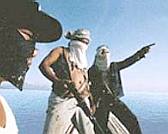
The only reason that Somalia is in the news these days is the spectacular desperation and criminality of the Somali pirates, an American sea captain held hostage by them, and Hollywood image sharp shooting by American Navy Seal commandoes to free him. This news will quickly fade but the reasons the Somali pirates exist and make news in the first place won’t fade. In the past year nearly forty ships have been hijacked off the coast of Somalia and millions have been paid out in ransom.
But the Somali pirates are not the modern day’s sea going Robin Hoods that some have tried to portray them as who rob from the rich, booty laden European and Asian ships and turn their riches over to their impoverished kin and villagers on the shore. They aren’t motivated as some Somali pirate mouthpieces have hinted, and backed up by some writers, as a kind of unofficial Coast Guard protecting their sea waters from plundering fisherman, and trying to halt illegal chemical and radioactive waste dumping off their coast.
A Somali pirate leader candidly told interviewers in Kenya last October after hijacking a Ukrainian freighter loaded with tanks, artillery, grenade launchers and ammunition that their sole motivation was to grab the ransom money.
It’s more than a money grab though that drives the pirates. It’s the never ending Somali crisis. The UN has described the security situation in Somalia as the worst the country has experienced since the early 1990s, while the UN's Food Security and Analysis Unit (FSAU) has described the level of human suffering and deprivation in Somalia as "shocking".

In the best of economic days Somalia still ranked near rock bottom on every economic and social scale of the world’s poorest countries. The same month that the Ukrainian ship was hijacked 52 non government organizations doing relief and humanitarian work in the country implored the UN to intervene in the crisis.
There is good reason for the urgent appeal. More than 3 million Somalis, or about half the country’s population, are in desperate need of emergency aid. This is a near one hundred percent increase in the aid stricken numbers from the start of 2008. The reasons for the desperation are well known; a devastating drought, record-high food prices, and a horrific and expanding war by gangster militia bands. The fighting in 2008 drove hundreds of thousands from their homes in the cities. The war fleeing refugees pushed the total of displaced persons to a staggering 1.1 million. The greatest impact of the suffering as always has fallen on the children. One in six children under five, or approximately 180,000 children, is acutely malnourished in South and Central Somalia.

Somalis are not the only ones who are in mortal danger from the raging violence. In 2008, 24 aid workers were killed and scores of others were kidnapped while carrying out their work. There were more than 100 reported security incidents directly targeting aid agencies. The majority of the aid workers are Somali nationals, but European workers have also been the victims.
The non government organizations did not simply beg the UN to intervene in the country’s crisis. They also lambasted international agencies for not doing more to protect civilians and aid workers alike.

The piracy escapades have made things worse in a couple of other ways. They have taken the glare off the dire conditions in the country since much of the Western press has fixated on the sensationalism of the piracy acts and President Obama’s response to it. Worse, the sea violence and the threat posed to shipping could disrupt the always precarious flow of food and medical supplies to the 1 million and daily increasing displaced persons in the country.
Several international donor groups have appealed to European and American donor groups to increase pressure on governments to formulate a plan to insure that the piracy doesn’t stop the flow of the aid.
A year ago, the Navy announced plans to build dozens of new smaller, more mobile combat ships to better chase down the pirates near the shore and maybe even hit their on shore bases. However the recent announcement by Defense Secretary Robert Gates, of defense budget cuts, puts that up in the air. Even if the ships are built that wouldn’t do much to stop the piracy. There are always hundreds more desperate, impoverished and violence scarred young men who would happily take the place of the pirates who American combat forces knock out.
Meanwhile, President Obama’s tough talk to frontally combat piracy is welcome and applauded by all. But the far bigger problem remains the never ending crisis of a broken, war torn nation that pushes thousands of men to high sea gangsterism. Navy Seal sharpshooters can’t do much to end that crisis.

Earl Ofari Hutchinson is an author and political analyst. His weekly radio show, “The Hutchinson Report” can be heard on weekly in Los Angeles on KTYM Radio 1460 AM and nationally on blogtalkradio.com

Thursday, April 09, 2009

An Honorary Degree for Kermit The Frog But Not President Obama


Earl Ofari Hutchinson

It’s not clear if Arizona State University President Michael Crow had any say in the decision not to grant President Obama, the school’s commencement speaker, an honorary degree. But one thing’s for sure the dumbest thing that school officials said in telling why they won’t grant an honorary degreee to President Obama was not that he didn’t have a credible body of work and thus supposedly was unfit for the honorary degree. It was that the commencement committee may not have even considered him for the degree in the first place. Here are the names of the wise ones on ASU’s Honorary Degrees Committee who snubbed President Obama for the honorary degreee.

Laurie Chassin, Psychology, 2010 (Chair) Christine Wilkinson, Senior Vice President and Secretary of the University, 2010 (Co-Chair) Roger Adelson, History, 2009 Bill Miller, Applied Biological Sciences, 2009 Joan Brett, Graduate College, 2010 Claudia Brown, Art, 2010 Chris Callahan, Walter Cronkite School of Journalism and Mass Communication, 2010 Philip Christensen, Earth and Space Exploration, 2010 Luis Gomez-Mejia, Management, 2010 Jewell Parker Rhodes, Virginia C. Piper Center for Creative Writing, 2010 Paul Patterson, Morrison School of Management and Agribusiness, 2010 Sander van der Leeuw, Human Evolution and Social Change, 2010 Linda Vaughan, Nutrition, 2010 Gary Waissi, ASU Global Engagement, 2010

The university vice provost and dean of the Graduate College; and the president of the ASU Foundation also are ex-officio members of the committee.

The committee members hail from all over the university map and they made no mention in the flurry of press announcements they put out variously explaining and defending the snub the exact criteria they used to determine why Obama didn’t cut the academic muster. That would be tough anyway. The whole thing is either ludicrous or farcical depending on how charitable one wants to be. By any measure--organization, political mastery, historic trend setting, his education and legal writings, research and instruction, and intellect—President Obama’s merits speak for themselves. And ASU officials pretty much acknowledged that by inviting him to give the commencement address in the first place.
The reason for the degree snub then can’t be lack of merit or a lack of a body of work. It’s something else and that something else speaks to the politics and money behind who gets an honorary degree and why they get it. In years past ASU has laddled them out to a laundry list of such academic wizards as a movie director, oil computer and microchip executives, and newpaper publishers. Universities, and that includes ASU, routinely hand out honorary degrees to a check list of fat cat contributors and donors. Universities have even been known to award them to politicians who have never taken pen to paper. This was the case in 2001 when Yale University awarded an honorary degree to George W. Bush. He was barely one year into his presidency. The sum of Bush’s academic accomplishment from Yale was a degree in history in 1968.

ASU also honored its favored political son, Barry M. Goldwater, with an honorary degree in 1961. It didn’t hurt that Goldwater was the state’s most influential US senator and could steer a lot of federal cash to the university. But a Goldwater honorary degree at least in that respect made some sense. Not sure if the same could be said for the recipient of the honorary degree from Long Island’s Southampton College in 1996. The academic marvel that year was a Sesame Street Muppet Kermit the Frog.
Then again maybe Kermit was more deserving than Bush since Kermit had used his celebrity to spread positive messages about environmental protection in public service announcements for the National Wildlife Federation, National Parks Service, the Better World Society, and other groups.
At least that’s what University officials said in defending Kermit’s honorary degree.

Then there are the universities such as the Massachusetts Institute of Technology, Cornell University Stanford University, the London School of Economics and Political Science and the University of Virginia. They play it close to the vest, maintain their level of real academic integrity and cut out the honorary degree sham.
ASU obviously isn’t on that elite list of academic non-honorary degree game players. And President Obama is not Bush or Kermit the Frog. So here’s how ASU President Crow can erase an embarassment. Ignore the Honor’s Committee’s blindspot toward or deliberate egg of the President, and bestow on him the award that he richly deserves, an honorary degree.

Earl Ofari Hutchinson is an author and political analyst. His weekly radio show, “The Hutchinson Report” can be heard on weekly in Los Angeles on KTYM Radio 1460 AM and nationally on blogtalkradio.com

Monday, April 06, 2009

Tribute to a Last Living Link to a Painful Past


Earl Ofari Hutchinson


The faint smile on Mrs. Gertrude Baines face midway through my tribute remarks to her was literally a smile for the ages. I, and a small group of well wishers, admirers, hospital staff, and reporters that gathered to pay a birthday tribute to Mrs. Baines on April 6 were witnesses to history; a living, breathing history filled with much pain and promise. At 115 years of age, Mrs. Bates, an African-American, had once more earned the proud and breath stopping distinction of being the world’s oldest person.
The Guinness Book of Records bestowed that title on her after a painstaking sift through stacks of official birth records. Along the way, it had discounted the claims from many worldwide of being the world’s oldest. An official from Guinness presented her with a proclamation at the birthday tribute that acknowledged her age feat.
I did not, however, give my remarks honoring Mrs. Baines to the assembled group solely because she had attained that amazing age, but rather for what she represents. At her world record shattering age and despite being permanently confined to a convalescent hospital, Mrs. Baines is still a strong role model for health and positive living. She also has a passion for the fight for justice. She is a member and solid supporter of the Main Gospel Church in Los Angeles, pastored by Warren J. Smith, who is one of the city’s top activist African-American ministers.
Smith is also a member of this writer’s education and public issues group, the Los Angeles Urban Policy Roundtable. The church has worked closely with the Roundtable in campaigns against gang and drug violence, police misconduct, job and housing discrimination, for juvenile justice reform, and political empowerment. In November, Mrs. Baines spoke proudly of how she had voted for and cheered on President Barack Obama. She considered this one of her proudest moments.
But Mrs. Baines also represents something even deeper and more profound. Her father was born into slavery in 1856. She is the daughter of a slave. She is one of the few last surviving links to the horror of slavery which is still a divisive, contentious and bitter part of the African-American past. Mrs. Baines’s life has spanned the near century of legal Jim Crow segregation, political disfranchisement, and racial brutality that followed slavery. Her life is a towering living reminder of and testament to the resilience, fortitude and courage of the many African-Americans who despite the odds overcame that terrible legacy and have done so much to enrich the social tapestry of America.
I was proud to say this directly to Mrs. Baines at her 115th birthday celebration. I was grateful when Mrs. Baines repaid me with her smile. Mrs. Baines truly lives as the eternal Mother Spirit of a people who have come so far against so much. She is a last living link to a painful part of the African-American past.

Earl Ofari Hutchinson is an author and political analyst. His weekly radio show, “The Hutchinson Report” can be heard on weekly in Los Angeles on KTYM Radio 1460 AM and nationally on blogtalkradio.com

Monday, March 30, 2009

Madonna Deserves Cheers Not Jeers for Casting Light on Africa’s Orphan Misery


Earl Ofari Hutchinson
First an outfit called Save the Children UK butted in and denounced Madonna for adopting Malawi orphan David Banda in 2006. Now another bunch has jumped into the adoption fray and branded her a”bully” for her plans to adopt another Malawi orphan. The Human Rights Consultative Committee pretty much rehashed the same tired complaint as Save the Children UK did three years back and that’s that Madonna is using her wealth and star power to end around Malawi’s adoption procedures.

Madonna ignored Save the Children UK in 2006 with their silly bellyache and she’ll likely do the same with the Consultative Committee. The figures tell the grim tale of why she should. According to UN estimates half of the 1 million Malwaian children with one or no parents are orphaned by AIDS. More than 13 percent of Malawi’s 13 million are poor, dirt poor, and not surprisingly the majority of them are women.

Malawi is hardly an aberration. More than 12 million children have lost one parent or are orphans in African nations. And given the still rampant disease, warfare and poverty that plague many of these countries, the number of orphans or near-orphans will soar to nearly 20 million next year. Apart from a string of cramped, desperately under-funded and in many cases unsafe orphanages in sub-Saharan Africa, many of these children are doomed to live out their childhood years in a caretaker existence.

That’s only the start of Africa’s orphan misery. Africa's orphans are still mostly unwanted anywhere else in the world, and that includes the United States. In 2005, more than 20,000 immigrant visas were issued to orphan children whom Americans adopted from other nations. Ethiopia, with a paltry 441 orphans taken in by Americans, was the only African country that cracked the top-10 list. Liberia and Nigeria were the only other African nations among the top-20 nations, with 182 and 82orphans taken in by Americans.

Madonna has raised millions through her Raise Malawi Organization to fight poverty and disease in the country. She’s made plans to build a school for young women there, and done more than any other celebrity too raise attention to the plight of Malawian orphans and women. Madonna could easily have been like the legion of air head stars whose idea of helping the poor is an annual photo-op mug shoot at a high profile, star studded, red carpet gala. Instead she put her money and name behind tackling one of the world’s toughest problems and that’s providing a better life for Africa’s dispossessed children. For that she’s piteously ragged on, sniped at, and backbitten, by every media chasing hound, and a handful of sanctimonious orphan relief groups. Why?

One reason for that is loudly and publicly stated. The other is unstated, and more contemptible.

Human rights and child protection groups claim that Madonna tossed her money and celebrity weight around to bend Malawi's adoption laws and fast-track the adoption, and that the adoption is another celebrity publicity stunt. Both are falsehoods. She observed the rules in 2006 with the adoption of Banda, and Malawi's courts have granted her an interim adoption order. She also kicked in a lot of dollars to boost orphanage services in the country. As one of the world's best-known superstars, with legions of paparazzi jumping at the chance to record her every cough, Madonna hardly needs to snatch an African child to grab some camera action.

The unstated, and more contemptible, reason that certain groups and individuals are upset about the adoption is the archaic notion that a white person, especially a wealthy white celebrity, is culturally clueless when it comes to raising a black child. Or worse, that they'll whitewash the child's black identity and tout white values (whatever they are).

What makes this notion even more dumb is that the crisis is not just one in which African babies are shunned in America -- African-American orphans are too. There are more than a half-million children in foster care homes in America. Nearly 40 percent of them are African-Americans. They stay in foster care homes on average a year longer than white children.

There is absolutely no hard evidence that the race of the adopting parent has much to do with whether an adopted child matures into a healthy, emotionally secure adult. The key is that the home must be loving, nurturing and financially stable. There is also little evidence that black children raised by white parents suffer permanent racial or cultural identity amnesia. Race and racism are still alive enough and in enough places in American society to insure that black children can't and won't forget that they're black. We need look no further than the man who sits behind the desk in the Oval office for proof of that.

Madonna did a huge service by using her star power not to exploit but to cast light on Malawi and Africa's orphan misery. You go Madonna.

Earl Ofari Hutchinson is an author and political analyst. His weekly radio show, “The Hutchinson Report” can be heard in Los Angeles on KTYM Radio 1460 AM and streamed nationally on blogtalkradio.com