Thursday, February 21, 2008

Order Now!
The Ethnic Presidency: How Race Decides the Race to the White House


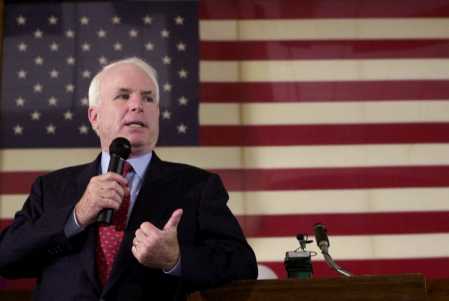
Age Won’t Be Obama’s Trump Card against McCain
Earl Ofari Hutchinson


Democratic presidential contender Barack Obama coyly hinted at something that has been virtually taboo during the fierce hunt for the White House in 2008. That’s likely GOP presidential candidate John McCain’s age. In a speech at the Jefferson-Jackson dinner in Virginia in early February, Obama hailed McCain for his half-century of service to the country.
This borderline ageist damn with faint praise of McCain was of course tame stuff compared to the dumb crack from B karate movie action guy Chuck Norris before the Florida primary last January that McCain was just too old to be president. Norris subsequently apologized but he still got a swift and deserved disappearance as a prominent mouthpiece for McCain’s GOP presidential rival Arkansas Governor Mike Huckabee. It probably ramped up in the number of votes McCain got from the loads of AARP seniors that retired in the state. That sweetened McCain’s victory there and rocketed his once seemingly DOA campaign forward faster.
Norris aside, age is and will be a factor in the possible showdown between McCain and Obama. Some Democrats undoubtedly bank that Obama’s boyish looks and fresh faced vigor will stand in stark contrast to the weary, and slow pace gait of McCain. But age won’t be an Obama trump card against McCain.
It just doesn’t titillate and get the tongues furiously wagging as race does with Obama and gender with Hillary Clinton. It shouldn’t. Age is no legitimate measure of McCain’s mindset, physical health, or even his possible longevity in the office. JFK, Nixon, and Clinton were all in their forties when they took office. Each had serious health problems, and each one faced serious political and personal crises during their terms, but their health didn’t lay them low. McCain released hundreds of pages of his health records before his presidential run in 2000 and last year to head off talk that he’s medically and emotionally incompetent (that pertains to his torture as a Vietnam POW) to be president. Even if he hadn’t, and even if there were health issues with him, his age still holds minefield peril for Obama.
Reagan is the best example of that. Other than sniggers, and wisecracks about his memory lapses and occasional gaffes, there was no evidence Reagan lost a single vote because anyone thought he was too old. The early signs of Alzheimer’s came much later in his term and by then the Reagan myth and legacy had been well ensured. The eyes of many in their audiences misted over the countless times McCain and the other one time GOP presidential candidates evoked Reagan’s name during their debates and on the campaign trail.
Reagan for his part did much to defuse the age issue when he turned to his Democratic opponent Walter Mondale in their presidential debate in 1984 and challenged, "I want you to know that I will not make age an issue of this campaign. I am not going to exploit, for political purposes, my opponent's youth and inexperience." The aim was not to score a quick debate point or to cut Mondale low, it was to make the point that age is not a liability but a desired quality in a head of state; that age equates with experience, level headedness, and maturity.
Then there are the voter demographics and age related issues. The vast array of programs from social security to education and housing subsidies for seniors soaks up more than a quarter of the federal budget. Legions of senior citizen advocacy groups keep a hawk like watch on funding, spending, and possible cuts in those services. The slightest hint of any attack on social security either real or manufactured politically is the political kiss of death for a candidate. Seniors have the political muscle to make sure of that. Those aged 60 and older make up almost a quarter of those who turn out on Election Day.
There is no such thing as an old age voting bloc. Seniors vote based on their needs, personal tastes, interests, and political preferences, just like other voting groups. But seniors have been far more likely to vote for Republicans than Democrats. In 2004, those over aged 60 gave Bush a wider vote margin over John Kerry than any other age group.
McCain deftly snatched a page from Reagan’s political playbook, dampened the age issue, and will try to turn the age table on Obama. He’ll pound on the point that a school boy looking, relative political newcomer on the national scene simply can’t be trusted too make the mature, sober, and vital decisions that presidents have to make especially in times of war, terrorist peril and domestic crisis. The irony is that age may just turn out to be McCain’s trump card instead of the Democrat’s even if Obama tries to help him out of his chair when they debate.

Earl Ofari Hutchinson is an author and political analyst. His forthcoming book is The Ethnic Presidency: How Race Decides the Race to the White House (Middle Passage Press, February 2008).

Wednesday, February 13, 2008


What to Make of Obama’s Strange Bedfellows, Namely Blacks and White Males
Earl Ofari Hutchinson


This is an election with some strange things happening. One of the strangest is the penchant for so many white males to join with African-American voters in a few primaries to back Democratic presidential contender Barack Obama. It’s strange not because of anything Obama has said or done to get so many white males behind him. It’s strange because of the possible motive many of the men that are voting for him. Let’s put it this way. Are they voting for him because they truly buy his flowery pitch of hope, change and unity. Or, is there something darker, and more insidious at work here. The something is the deep, persistent, and widespread notion among many men that a woman is not fit to hold the highest office especially if that woman is named Hillary.

Males make up slightly more than forty percent of the American electorate, and of that percent, white males make up thirty six percent, or one in three American voters. They have been the staunchest Republican backers since Ronald Reagan’s trounce of Democrat Jimmy Carter in 1980.

Without their solid support in 2000, Democratic Presidential contender Al Gore would have easily won the White House, and the Florida vote debacle would have been a meaningless sideshow. In 2004, Bush swept Democratic presidential candidate John Kerry in every one of the states of the Old Confederacy and three out of four of the Border States. He grabbed more than 60 percent of the white male vote nationally. In the South, he got more than 70 percent of their vote. That insured another Bush White House.

Male voters gave not just Bush but Republican Presidents Bush Sr., Ronald Reagan, and Richard Nixon the decisive margin of victory over their Democrat opponents in their presidential races. The majority of them that voted for the GOP presidents were middle-to upper-income, college educated, and lived in a suburban neighborhood. This closely parallels the demographic of the men that are voting for Obama. But at the same time, fewer than one in five white males labeled themselves as liberal.
The reasons for the intense and unshakeable loyalty of working and middle-class men to the GOP are not hard to find. The gap was first identified and labeled in the 1980 contest between Reagan and Carter. That year Reagan got more than a 20 percent bulge in the margin of male votes he got over Clinton. Women voters by contrast split almost evenly down the middle in backing both Reagan and Carter. Most men made no secret about why they liked Reagan and what they perceived that he stood for. The tough talk, his apparent firmness and refusal to compromise on issues of war and peace fit neatly into the stereotypical, male qualities of professed courage, determination, and toughness.

Then there’s the thing that’s even less politically and gender correct to admit and that’s that the bias of many men toward women in high positions is so deep seated that they refuse to believe that they are even biased. Psychologists have testified in countless gender bias law suits that the “unconscious bias” of male managers against women, especially against women attaining power positions. The refusal of men to promote women has been the biggest factor fueling gender discrimination in corporate hiring and promotions. Male managers in charge of promotion and pay decisions unwittingly engage in "spontaneous" and "automatic" stereotyping and "in-group favoritism" that results in the most desirable jobs at the company being filled by white males.

Even if unconscious gender bias affects only a relatively small percent of men in a close contest between a male and female candidate in which the two are rated fairly evenly in competence, qualifications and experience, the refusal of many men to vote for her could harm her candidacy. Female candidates offset the male bias by getting solid support from women voters.

Earl Ofari Hutchinson is an author and political analyst. His forthcoming book is The Ethnic Presidency: How Race Decides the Race to the White House (Middle Passage Press, February 2008).

Wednesday, February 06, 2008

Order Now!
The Ethnic Presidency: How Race Decides the Race to the White House


Democrats Pose Greater Peril to Obama or Clinton than GOP
Earl Ofari Hutchinson


There was absolutely no surprise at the results of Super Tuesday. This writer flatly said days before the first vote was cast that Super Tuesday would be anything but super for either Hillary Clinton or Barack Obama, and that neither would or could deliver the knockout punch.
There are two colossal reasons that virtually preordained the muddled, confused and frustrating outcome for the two Democratic presidential contenders. The first is the Democrat’s winner-not-take-all proportional system and the system of super delegates that they have dumped onto the primaries. Super delegates are at large delegates and can pretty much vote for whomever they want, and under the proportional system delegates can be divvied up according to the vote total that the respective candidate gets in Congressional districts. The idea behind that is to bring democracy with a small d to the vote process and snatch the decision about who gets the big prize out of deal making party bosses at the national convention.

But the first reason for the Democrat’s Super Tuesday muddle pales when stacked up against the second reason. And that’s the fast emerging and much alarming polarization among Democratic voters, or put another way, the hard lines between those backing Obama and those backing Clinton and the reasons why they’re backing them. Exit polls showed two clear things. The overwhelming majority of African-Americans in the South back Obama. The overwhelming majority of Latinos in the Western states back Clinton. The other is that white men in increasingly bigger numbers are backing Obama. And Democratic voters are supporting their picks with passion and zeal.

Latinos and blacks are the two big, strategically placed, and dependable voting blocs for the Democrats. In every election back to Lyndon Baines Johnson’s smash victory over Barry Goldwater in 1964, blacks have been the loyalist of loyal foot soldiers for the Democrats. With the surge in Latino voting numbers in the past two decades, Latinos have just as important to the Democrats and have been nearly as loyal to them as blacks.

The tormenting question for Clinton then is if she eventually gets the grand Democratic prize will African-American voters who have virtually turned their tout of Obama into a messianic crusade back her with the same fervor and more importantly numbers? A lackluster and lukewarm turnout by blacks for her would spell big trouble for her and the Democrats in November.

The equally tormenting question for Obama is if he eventually gets the Democratic grand prize will Latino voters back him with the same fervor and numbers as they did Clinton? The same rule applies to him as Clinton. A lackluster and indifferent turnout by Latinos would spell big trouble for him and the Democrats in November.
Then there’s the question of white male voters. They make up nearly forty percent of the American electorate. In every election dating back to Ronald Reagan’s big wins over the Democrats in the 1980s and since, they have powered GOP victories in national elections and more importantly have been the sure ticket of GOP presidents to the White House. Bush got a whopping sixty four percent of the white male vote, and he did even better among white males in the South. Their sudden like of Obama then is suspect. The perplexing question is are they voting for Obama because they are truly sold on his message of hope and change, or is there a darker reason? And that is that they hate the thought of a woman bagging the highest office, especially if that woman is named Hillary.

A dirty secret little of the campaign just may be that in this age of supposed gender enlightenment when men profess profusely that they have no problem backing a woman for president many secretly do. This is not idle speculation. Polls have consistently shown that while whites are virtually unanimous in saying that they have no problem voting for an African-American for president, far fewer say the same about a woman.

When the dust finally settles in the fall, the eventual GOP presidential nominee will do his internal fence mending in the party, and will placate the warring other presidential opponents and competing factions. He will have the usual king’s ransom campaign chest, the spin of Fox and other major cable TV news outlets and conservative talk radio jocks, the solid backing of millions of conservatives and Christian evangelicals, the sure electoral votes of most of the South and the heartland states, the X factor of race and gender working in his favor against Hillary and Obama, and the hunger to maintain Republican dominance.

The last thing that the Democrats need is a fractured Democratic Party that’s hopelessly split into two feuding, finger pointing and irreconcilable factions. That could pose an even greater peril to their bid to take back the White house than the GOP. That possibility is looming bigger and bigger.

Earl Ofari Hutchinson is an author and political analyst. His forthcoming book is The Ethnic Presidency: How Race Decides the Race to the White House (Middle Passage Press, February 2008).

Saturday, February 02, 2008

Order Now!
The Ethnic Presidency: How Race Decides the Race to the White House


Super Tuesday Answers Some Questions But Raises More for Clinton and Obama
Earl Ofari Hutchinson


The odds are that Democratic presidential arch rivals Barrack Obama and Hillary Clinton will know no more about which of the two will be the party’s standard bearer the day after Super Tuesday than they did when the day started. The early talk about the “inevitability” of Hillary’s march to the Democratic nomination has long since ceased. And any talk about Obama’s inevitability, despite his rock star size crowds, poll surge and high profile endorsements, is just as nonsensical and wishful thinking. Obama will win some of the 15 Democratic state primaries and seven caucuses and one in American Samoa and Clinton will win some others. In the biggest and most crucial delegate rich state of California, the delegates are parceled out proportionally, so both Clinton and Obama will get their share.

But even with no Clinton or Obama knockout punch on Super Tuesday, the day will still answer some questions while raising a couple of large questions for which ever one grabs the top Democratic prize. The first question for Obama is will white voters en masse back an African-American candidate. Nearly every white voter in every poll profusely swears that they are color blind, and many back pat Obama, and say they will vote solely on the basis of competence, qualification and vision. They’ve said the same thing in head to head contests between black and white candidates in past elections and then once in the privacy of the voting booth done just the reverse. The result: the black candidate has gone down to flaming defeat.
But Obama’s race neutral change pitch has had earth rattling political reverb and he will likely get a significant number of white votes, particularly from younger voters. That will in part bury the Bradley effect and that’s the penchant for many white voters to dupe pollsters and interviewers about their feelings on race. At least that is, bury it in the primaries where his opponent is a woman with towering negatives with many voters. The questions for Clinton on the gender side is will male voters in big numbers back her. In some polls more than half of male voters say they wouldn’t vote for her, and are even less charitable toward the notion of a woman president than a black president.

A question and a worry for Obama is can he win a big number of Hispanic voters over. That’s only an issue in part because of the tensions and conflicts that have marred relations between blacks and Hispanics in some places, and in greater part because of the long standing ties, heartfelt affection, and political court by the Clintons of Latinos. His success at chipping away some of Clinton’s Latino firewall in California and the Western states where Hispanic voters make up ten to twenty percent of the vote could be a deal maker or breaker in his drive to the nomination and beyond.

The question for both is: Do Americans really want the change that they say they want. Obama is betting the political bank they do and even Hillary has done everything she can to counter the charge that she’s old guard politics and that she is just a much as a change maker as Obama. Another question for both is how big the issue of the Iraq war still is to voters. Obama has pushed hard to sell himself as the only top tier candidate that opposed the war from the start, and that Hillary at least initially backed it. But polls now show that the war with the appearance of stabilization and the military surge in Iraq is not the top campaign issue it once was.

The last daunting question for the Democrats is how to keep the momentum going after Super Tuesday for the months up to the convention in August and make sure the muddled outcome of Super Tuesday doesn’t split the Democrats into two warring and irreconcilable factions. That would spell doom for the party in the fall.

The Republicans don’t have to answer that question. Ten of the Republican primaries are winner take all affairs. If one candidate, and from the big time endorsements that he’s gotten and the poll numbers, that candidate is likely to be John McCain. He almost certainly will emerge with a commanding lead over Mitt Romney and Mike Huckabee in the number of delegates needed for the GOP nomination. He will have six months to do internal fence mending, unite the warring and wavering GOP core factions, pile up key endorsements, massage, streamline, and sharpen the party’s message, further bulge his campaign war chest, and further distance himself from Bush’s unpopularity. That guarantees the most important thing of all: a united Republican Party without the albatross of the Bush legacy.

Super Tuesday will answer questions for the Republicans. And raise more questions for the Democrats. That makes Super Tuesday much less super than Obama or Clinton would like.

Earl Ofari Hutchinson is an author and political analyst. His forthcoming book is The Ethnic Presidency: How Race Decides the Race to the White House (Middle Passage Press, February 2008).

Monday, January 28, 2008


‘Nevada Phenomenon’ Bigger Peril to Obama than the Bradley Effect
Earl Ofari Hutchinson


A confident Democratic presidential contender Barack Obama shrugged off the buzz that he’d crash and burn with Latino voters, “Not in Illinois, they all voted for me.” But not so fast; there was this retort from a reader, yeah, but you ran against Alan Keyes. Keyes, being the luckless and hapless Eleventh hour Republican political sacrificial lamb who Obama annihilated in his smash victory for the U.S. Senate in 2004. But this time around, Obama faces a far bigger opponent than Keyes could ever hope to be, or even for that matter archrival Hillary Clinton. It’s the ‘Nevada Phenomenon’. It poses a far bigger danger to Obama’s White House drive than even the much debated ‘Bradley Effect’.
The Bradley Effect is named after former Los Angeles. mayor Tom Bradley who lost his bid for California governor to a white opponent in 1986, though Bradley had big leads in polls. Many white voters told pollsters and interviewers that they had no problem voting for an African-American, but once in the privacy of the voting booth voted for his white opponent.
The ‘Nevada Phenomenon’ by contrast has nothing to do with the supposed penchant for white voters to deceive pollsters and interviewers on race. In the South Carolina primary white voters went in reverse. The polls had Obama winning only ten percent of the white vote but in his smash win he more than double that percent. The ‘Nevada Phenomenon’ instead is the mix of wariness, fear, indifference and even hostility of the majority of Latino voters toward a black candidate.
It is more troublesome and intractable than potential white voter resistance to Obama. Even though in South Carolina and other Deep South primary states Obama lags behind Clinton among white voters, he’s still likely to get a respectable percent of white votes. That’s not true with Latino voters. Obama’s poll popularity with Latinos hasn’t budged very much despite his heightened name identification, media boost, energizing change pitch and personal charisma.. And if the history of black candidates, even popular well known and victorious candidates that ran for office and bombed with Latino voters is any indication, Obama won’t do much better than they did.

Start with the politician that gave the ‘Bradley Effect’ its dubious tag. During his 20 year reign as Los Angeles mayor, Bradley won election five times, and built a solid coalition of black, Jewish, and suburban Anglo white voters. However, Latino voters played only the barest of bare roles in Bradley’s coalition and elections. Even though Latinos then made up nearly one-third of the city’s population and were a rising percent of the voters, Bradley made few direct appeals to Latino voters for support.
Since then the political polarization between Latino voters and black candidates has been a virtual trademark in every other race where a black candidate has squared off against a white or Latino candidate. In 1993, Rudolph Giuliani, a tough law and order, conservative Republican running in heavily Democratic New York city against liberal African-American Democrat David Dinkins got nearly forty percent of the Latino vote. Nearly a decade later, Lee Brown, the former New York City police commissioner, got less than 30 percent of the Latino vote in his run-off race against Orlando Sanchez for Houston mayor. The even more popular, veteran former Congressman Ron Dellums received barely thirty percent of the Latino vote in his race for mayor in Oakland against a Latino challenger in 2005.
In each case the black candidates won their races with overwhelming support from black and substantial support from white voters. Their challengers were conservative Republicans or centrist Democrats They actively courted the Latino voters, and even won the important endorsements of prominent Latino elected officials and business leaders. That did little to dent the vote barrier between the majority of Latinos and the black candidates.
In Nevada, the pattern was the same. Obama got the endorsement of the leaders of the heavily Hispanic Culinary Workers Union. But getting the vote of the rank and file union workers was a far different matter, as the subsequent vote showed. Latino voters, many of them almost certainly members of the culinary union, defied their leaders and helped propel Clinton to victory.
This was yet another danger sign that the continuing reluctance of Latino voters to back black candidates could have a blowback effect on Obama.
The Super Tuesday primaries on February 5 will be a big test for him with Latino voters. Their numbers have soared in the key primary states of New Jersey, New York, Florida and his home state, Illinois. So much so that the black vote, even assuming that he will grab a far bigger share of that vote than Clinton, and split the white vote, will not insure an Obama victory. The Latino vote looms as the X factor for him. Unlike the subtle, much harder to finger ‘Bradley Effect’, the ‘Nevada Phenomenon’ is an open challenge to any black candidate that needs Latino votes to win. Obama is now the black candidate that faces that challenge, and danger.

Earl Ofari Hutchinson is an author and political analyst. His forthcoming book is The Ethnic Presidency: How Race Decides the Race to the White House (Middle Passage Press, February 2008).

Wednesday, January 23, 2008


Writing the Obituary for Bradley Effect is Premature and Foolhardy

Earl Ofari Hutchinson


Democratic presidential contender Barack Obama has never publicly made mention of the Bradley Effect. The Bradley Effect is the label that’s been plopped onto the penchant of many white voters to shade, deceive or just plain lie to pollsters and interviewers when they tell them that color doesn’t mean anything to them in an election. The only thing they claim they look at is the competence and experience of the candidates in an election. In a CNN/Opinion Research Corp.poll released on Martin Luther King', Jr.'s birthday nearly three out of four whites say America's ready for a black president, presumably that means they'd vote for Obama without batting an eye.

After Obama’s breakthrough win in the Iowa caucus election and his narrow loss in New Hampshire, two of the whitest voting states, political experts trumpeted that the vote for Obama was close to that of his numbers in the final polls. They gleefully rushed to write the obituary for the Bradley Effect. They moved to fast. The Bradley Effect is alive and well, and it appeared to be very much in play in Nevada. Hillary Clinton trounced Obama among the state’s white voters. Obama got the overwhelming backing of black voters and that markedly bumped up his vote totals. But they make up less than one in five of the state’s black voters.

The white vote or lack of it that Obama got in Nevada is far more representative and ominous for Obama than the white votes he got in Iowa or New Hampshire. Many Iowa Democrats are independent, populist leaning, and have broken ranks in the past with the Democratic Party’s odds on favored candidates. Obama also got a huge boost from young voters. They were fired up enough by his change message, relative youth and the novelty of his campaign to flood the polls for him. In New Hampshire, legions of voters are independent, even contrarian, in who and how they pick their candidates. But Nevada was a far different story.


Bush won Nevada twice but Bill Clinton also won the state in 1996. At first glance, the state is a political oddity when stacked up against the rock solid GOP states to the North and to the East of Nevada. Its relative political flexibility also makes it a state that seems very much in play for the Democrats. Thousands of the state's voters are young, and could be considered moderate Democrats. But that’s what makes it even more troubling for Obama. A big cornerstone of his pitch is to younger, moderate Democrats, and independents. He has done everything possible to tailor his message, style, persona, and even the appearances he makes in the most racially neutral way possible. There is absolutely no chance that there will be a Jesse Jackson or Al Sharpton sighting in his campaign at least in the swing states.

That’s wise. They would be the political kiss of death for him if there is even the vaguest hint that they are visible in his campaign or too enthusiastically cheer lead his campaign. In fact Sharpton hasn’t endorsed Obama, and Jackson's endorsement has been perfunctory. He has even criticized him a couple of times. Their noticeable hands off his campaign are tacit recognition of the Bradley Effect. Their active involvement in it or even favorable words by them about it could stir the Bradley Effect.

Though Obama has said nothing publicly about the Bradley Effect, he is very much aware that it derailed Bradley’s drive to be the nation's first black governor in modern times, caused Doug Wilder to sweat nervously on Election night in Virginia before he squeaked out a win there for governor in 1989, and helped do in Harvey Gantt and Harold Ford, Jr. in their Senate campaigns in North Carolina and Tennessee. It wreaked havoc in other campaigns where a black has squared off face to face with a white candidate.

Though there's no proof that the Bradley Effect played any role in Obama's defeat in New Hampshire, Obama campaign insiders admit that they are keeping a hawk like eye out for any sign that it could crop up and hurt their man. They’re smart to do that. The plain truth is that if Obama bagged every black vote in every state it wouldn’t insure him the Democratic nomination, let alone the White House. White males still make up nearly forty percent of the American electorate, and older white women make up a big bloc of voters, and the majority of them are Democrats. He can’t win without their votes.

The Bradley Effect is murky, amorphous, and virtually defies fingering. Yet, it will cause nervous moments for Obama’s campaign when it rolls into the South and the other Western and heartland states. There’s a lot of campaign left. To write the obituary for the Bradley Effect is premature, and worse, foolhardy.

Earl Ofari Hutchinson is an author and political analyst. His forthcoming book is The Ethnic Presidency: How Race Decides the Race to the White House (Middle Passage Press, February 2008

Monday, January 14, 2008

Obama Needs a History Lesson about Hillary and King


Obama Needs a History Lesson about Hillary and King
Earl Ofari Hutchinson


The Obama camp did it again. They manufactured yet another issue out of a non issue when they pounded Hillary Clinton for supposedly defiling Dr. Martin Luther King, Jr. by minimizing his role in the civil rights struggle. Here’s Hillary’s terrible sin per the Obama campaign crowd. She said that Dr. King’s dream was realized when President Lyndon Johnson shoved the 1964 Civil Rights Bill through Congress. This was anything but a put down of King.

Hillary paid tribute to King for laying the groundwork for the civil rights bill and gave justifiable credit to Johnson for ramming the bill through a bickering, divided and very recalcitrant Congress. Her point was that presidents that have their public policy priorities screwed on right can make changes, monumental changes, for good.

If Hillary could be faulted for anything it’s that she didn’t go far enough. If Johnson hadn’t forcefully intervened and jawboned, prodded, arm twisted, and embarrassed the slew of wavering and hostile Congressmen to the bill into supporting the bill, or at least tempering their opposition to it, King’s dream would have remained just that, an empty dream. King recognized that. In a Playboy interview in 1965, he said this about Johnson: “He has demonstrated his wisdom and commitment in coming to grips with the problem (racial discrimination). My impression is that he will remain a strong president for civil rights.” History amply proved that, and Johnson despite his Vietnam War tumble from historical grace, still is regarded as the president that did more for civil rights than any other president.

But I’d go even further still. King gets much deserved praise and is much honored for igniting the national fervor for civil rights and galvanizing thousands to put their bodies on the line in the civil rights battles. Yet, there’s an ugly side and often forgotten note to that. The street marches and demonstrations also stirred the first tremors of white backlash. The George Wallace surge in the North, the open hostility of many Northern whites to housing and school integration, and the Republican reawakening in the South was a direct outcropping of the civil rights push. This stiffened the spines of Southern Democrats and conservative Northern Republicans who dug their heels in and flatly opposed the bill, piled amendment after crippling amendment onto the bill initially, and employed every legal and parliamentary dodge and stall tactic they could dredge up to delay a vote on it, if not to kill it outright.

King could do nothing about this. JFK who introduced the bill couldn’t do anything about it either. He was at his wits end after months and months of Congressional ducking and dodging on the bill about how to get it moving. By the time Johnson took office, following JFK’s murder, the bill was still born in Congress. There was every chance that it could be shelved. However, Johnson would have none of that. He was a Southerner and he knew the mood and temper of the South. From his decades in the Senate he knew where the political skeletons were buried and how to rattle them. He did what King and Kennedy didn’t have a prayer of doing, he got the sympathetic ear of enough Southerners to take some of the steam out of their vehement opposition to the bill.

The rest of course is history. The Civil Rights Bill, not King’s marches and demonstrations, broke the back of legal segregation in America and became the watchword for progressive, visionary social legislation for decades to come.
King and all the top civil rights leaders knew that history had been made with the passage of the bill, and that the man that played the towering role in making that history was LBJ A t the signing ceremony for the bill, King and the other civil rights leaders beamed when Johnson handed them the pens after the signing. They effusively praised him for his tireless effort.

Hillary’s statement was a simple, honest, and respectful nod to Johnson for his indispensable part in making civil rights a legal fact and reality in America. This was the same nod that King and the civil rights leaders made more than four decades ago to him.

This is a nod that the Hillary haters have forgotten or deliberately distorted in their clinical obsession to smash mouth every Hillary utterance. This is a history lesson that Hillary got right about King and Johnson, and one that the Obama campaign flunked badly.

Earl Ofari Hutchinson is an author and political analyst. His forthcoming book is The Ethnic Presidency: How Race Decides the Race to the White House (Middle Passage Press, February, 2008).

Monday, January 07, 2008


What to (and not to) Expect from an Obama White House
Earl Ofari Hutchinson


A President Barack Obama will be the most scrutinized president since Abraham Lincoln. Ironically, the reason for this has less to do with race, though that will loom large in the lens of many, as it has to do with him. He’s lifted public passions and expectations to the clouds with his soaring rhetoric about hope and change; the man who can repair the shambles of Bush’s domestic and foreign policies.
That’s quite a cross for a Senator halfway through his first term, with a wafer thin voting record, little experience with foreign policy matters, and whose still fuzzy, or to put it more charitably, with a still work-in-progress program on affordable health care, education, criminal justice system reform, tax policy, and the housing crisis. A man who needs to pound consistency into his pronouncements that at times seem at odds with the other pronouncements he’s made on winding down the Iraq war and the terrorism fight.

The jury is still way out on just how many of those inflated expectations that he can fulfill. But there are glaring clues as to how much change he can or will even try to make. One is his record in the Illinois state legislature. At first glance, his votes and views during his days in the Illinois Senate on taxes, abortion, civil liberties, civil rights, law enforcement and on capital punishment give much comfort to those who crave for him to make the change he hints at. His stance on tax hikes marked him with some business and taxpayer interest groups as another tax and spend Democrat, and his views on social issues, marked him as an unabashed liberal.

He’s anything but that, and that’s another clue as to what to expect from an Obama White House. He’s a centrist Democrat who is fast replacing the Clinton’s with the Democratic Party’s shot callers as the consummate party insider; their new go to guy. Corporate donors, Hollywood moguls, and through the back door with him, fat cat lobbyists with the quiet nod of Democratic Party insiders have dumped millions into his campaign. They don’t shower money, favors, and promotional praise on a candidate unless they are comfortable that the candidate will not stray to far off the beaten political path and abandon the moderate, respectable approach to policy making.
In the White House, Obama will move cautiously and do everything he can to ensure that the tag “liberal” won’t be slapped on him. The majority of Congressional Democrats and Republicans are centrist to conservative to even ultra-conservative. They would instantly draw their line in the sand against him if he makes a quick push for big tax hikes for education and health care to a push for a quick withdrawal from Iraq which Obama does not favor.

He will do everything he can to escape the fate that befell Bill Clinton the instant he touched a toe in the White House. Republicans waged a gutter wallowing personal and political stealth, and at times, open war against him and his policies, and Clinton made no pretense of being a liberal Democrat. Their attack arsenal included everything from personal slander to stonewalling his judicial appointments and his stab at health care reform. That forced Clinton to tip toe even further to the right on the death penalty, beefing up police power, gay rights, welfare reform, and reining in bloated military spending, while assuring that the Democratic Party would not pander to minorities and the poor.

Obama’s pro choice and abortion rights defense in the Illinois legislature earned him a perfect rating from the Illinois Planned Parenthood Council. And he was a major backer of legislation limiting police interrogations and requiring police to keep racial stats on unwarranted traffic stops, and he supported strict gun control. These are three hyper sensitive issues for conservatives. If Obama puts White House muscle into big reform fights on these issues, he will draw instant fire from right to life groups nationally, police unions, and the NRA.

It’s not likely he’ll risk that, it’s not his style anyway. He got high marks from Illinois Senate Republicans precisely for his willingness to horse trade, deal make, and compromise on the touchiest of issues for conservatives. They praised him as a flexible politician and consensus builder who listened to the views of his Republican opponents.

American politics demands that, especially of moderate Democrats. With Obama, corporations and lobbyists will be even more hawk like in guarding the legislative door to protect their interests, conservatives will tighter their perennial gate keeping against any effort to push abortion rights, and the defense industry will be even more vigilant against any effort at deep military slashes.

Any president that bucks these dominant special interests risks being branded anti-police, anti-business, pro abortion, pro labor, pro-gun control, and a dreaded tax and spend liberal Democrat. That fear more often than not translates into even the best intentioned president caving in when the battle is on for crucial political and social reforms. That will include even one who has made hope and change his ticket to the White House.

Earl Ofari Hutchinson is an author and political analyst. His forthcoming book is The Ethnic Presidency: How Race Decides the Race to the White House (Middle Passage Press, February, 2007).

Thursday, January 03, 2008


A President Obama No Proof that America has Finally Kicked Its Racial Syndrome
Earl Ofari Hutchinson


A win or a big showing by Democratic presidential contender Barack Obama in Iowa will do two things. It will prove that a significant number of white voters will vote for a black presidential candidate. It won’t prove that America has finally kicked its racial syndrome. From the moment that Obama stood on the steps of the Illinois state capitol building in Springfield, Illinois last February and announced the launch of his dream presidential campaign to change America, the political deck seemed hopelessly stacked against him turning himself into a serious contender for the White House. The initial knock against him was that he was too new, inexperienced, and had a wafer thin legislative record in the Senate, and was saddled with a name that when twisted, mangled, or deliberately distorted sounded suspiciously like Osama.

But by far, the biggest hole card against him in the political deck was race. Put bluntly Obama is an African-American, and the conventional thinking and reality is that white Americans might publicly swear that color doesn’t matter to them when it comes to voting for a candidate, but then suddenly develop an acute case of voting booth conversion on Election Day. That meant that once inside the cozy and very private confines of the voting booth they punch the ticket for a white candidate in a head to head contest with a black candidate. The campaign trail is strewn with the wreckage of the campaigns of black candidates that held leads, in some instances substantial leads, over white opponents, and then went down to flaming defeat on Election Day.

The two tips that Obama could escape their fate was the victory of Deval Patrick who won the Massachusett’s governor’s seat in 2006. He had even less political experience than Obama, had less money, and was up against a seasoned office holder. He won anyway, and he won with white votes.

The even bigger tip that things might be different with Obama is Obama himself. He plays hard on his multi-racial upbringing and heritage, can raise bushels of campaign cash, is a centrist politician that gets high marks as a consensus builder during his stint in the Illinois state legislature, and is not typed as a race card player ala Jesse Jackson and Al Sharpton.

In other words, he is an American exception, a black man who is, savvy, telegenic, moderate, and poses no racial threat. This quirky, even schizoid, American exceptionalism that plays well for Obama has been time tested in sports, entertainment, and in the business and the professional worlds for decades. That is the willingness of many whites to view some blacks through color neutral lens, and elevate them to a perch beyond race. In the crudest way, it’s expressed with the always offensive crack to some highly regarded black professionals, businesspersons, sports and entertainers that they are different, and not like the others. But generally, it’s simply to cheer the few exceptions for their talent and ability (as even if that’s the exception) and keep praising them as long as they make no personal and legal missteps.

The beyond color pass isn’t granted to some blacks solely out of enlightenment or altruism. There’s a dividend. It permits many whites feel goodism, and to back pat themselves for being color blind and that shows how far America has come in dumping the ugly burden of racial bigotry. That notion drove much of the decade long contentious debate over affirmative action. Affirmative action opponents railed that minorities had broke down the racial barriers, and individual talent and ability were the only thing that counted in society. Race simply violated the precepts of a color blind society. The Obamas of America seemed to more than bear that out.

Even if the now thinkable happens and Obama does wrest the Democratic presidential nomination, and even beyond that the White House, there are other sobering historic examples from the long rule of England’s Queen Victoria to the time in office of Pakistan’s tragically martyred former Prime Minister Benazir Bhutto that proves that an Obama can get high marks, but that doesn’t necessarily mean that racial hostility and victimization has vanished. Victoria’s rule did not change gender relations in Victorian England. It was still a rigidly, class, and male dominated, patriarchal society. Bhutto in power didn’t change gender relations in Pakistan either. It is still a rigidly Islamic fundamentalist, caste, and male dominated, patriarchal society.

An Obama presidency would be a racial step forward in the sense that it shows that enough whites can and will look past race to make a black, especially an exceptional black, their leader. It would not show that they are willing to do the same for the millions of blacks that cram America’s jails and prisons, suffer housing and job discrimination, are trapped in failing public schools in America’s poor, crime ridden inner cities.

Their plight and how they are viewed and treated will remain the same after Obama takes office as it did before. A President Obama won’t change that.

Earl Ofari Hutchinson is an author and political analyst. His forthcoming book is The Ethnic Presidency: How Race Decides the Race to the White House (Middle Passage Press, February, 2007).

Thursday, December 20, 2007


“They Hate Each Other Too!”
or Blacks and Latinos Can be Bigots Too
Earl Ofari Hutchinson


The shock jock on a popular Los Angeles talk radio station screamed through the microphone with apoplectic delight, “You see, they hate each other too. The “they” and the “each other” are African-Americans and Latinos. His shout was loud, crude, and aimed to do what shock jocks get paid to do, namely shock. But this was not standard shock jock bluster. He based his rant on a troubling eye catching response to a question in a recent survey by the New America Media. NAM is a consortium of ethnic media groups in the San Francisco Bay Area. In a wide-ranging poll, it sampled opinion among blacks, Latinos and Asians about each other.

The response that raised the eyebrows was that a near majority of Latinos said that blacks were crime prone and that they feared for their safety around them. A slight majority of blacks returned the negative typecast compliment and said that Latinos take jobs from blacks and they are out to undercut their political power.

Those are the type of utterances that white bigots supposedly spew. However, now they just as easily rolled off of black and Latino lips. That revelation for the shock jock and for many other whites merely confirmed that blacks and Latinos can be bigots too. The ugly truth is they’re right. And that also tells much about the often muddled, confused, and conflicted picture of race and ethnic relations in America.

For decades bigotry was always defined as racial discrimination and violence against blacks by whites. The black power movement and the strident black militancy of the 1960s dramatically changed that. Now blacks were hammered for their anti-white racial taunts. That eventually morphed into and codified as blacks playing the race card whenever things went especially bad. That always meant making whites feel guilty to get an advantage. The point is that blacks and whites were still the only ones that hurled vicious and vile negative stereotypes about each other and at each other, and that’s where it ended. The NAM poll convincingly exploded the notion that blacks and whites were the only groups that saw each other through jaundiced racial lens.

Blacks, Latinos and Asians can hold the same hostile racial attitudes toward each other, and aren’t afraid to voice them. The first real tip that things weren’t as idyllic as they appeared on the ethnic relations front came in 2005 with the furor over the quip by then Mexican President Vicente Fox. In a speech, Fox said that Mexicans are hard workers and will work jobs that blacks won’t work. That ignited a storm of protest from civil rights leaders and many African-Americans.

The top rung Latino civil rights groups and the Congressional Hispanic Caucus instantly understood the severe harm that the remark could do to the fragile relations between blacks and Latinos, and rushed to denounce Fox. But denunciations and demands for apologies couldn’t erase Fox’s words, or the sentiment behind them. Many Latinos openly and many more privately probably agreed with Fox. They insisted that immigrants would work the hardest, dirtiest, lowest paying jobs that blacks won’t work. And some even less charitably claimed that blacks wouldn’t work these jobs because they are lazy and slothful.
That belief, of course, is crude, false and racist. But it reflected the big problem that relations between blacks and Latinos are rife with falsehoods.

Yet ethnic insensitivity, however, is not a one-way street. In a blast at Fox for his remark on immigration and jobs, Al Sharpton also reflected the skewed view held by many blacks that Latinos are an economic threat: “We need to deal with the fact that there has been an inordinate amount of tension where people have come across the border for almost slave wages, competing with Latinos and blacks.” Sharpton rammed the point home by describing illegal immigration as a 21st century slave trade. That dredged up the negative images of hordes of uneducated, poor Mexicans invading the U.S.
Latino activists have waged a furious battle for decades against that image as well as against the depiction of Latinos as lazy, immoral, crime-prone, drug dealers, illegal aliens, service workers, and mothers with packs of ragged children. Those images constitute stereotypes that TV and Hollywood have done much to propagate.

The common litany of stereotypes, myths and misconceptions that many blacks and Latinos now routinely toss out about each other sooner or later will rudely force their way into and badly taint the way blacks and Latinos see each other. In a worse case scenario, the gulf in attitudes, perceptions and ultimately relations could widen rather than narrow between the two groups. The New America Media survey zeroed in on the negative beliefs and sentiments that blacks and Latinos hold about each. It other offered more proof that race relations and worse racial bigotry can no longer be colored in black and white.

Earl Ofari Hutchinson is an author and political analyst. His new book is The Latino Challenge to Black America: Towards a Conversation between African-Americans and Hispanics (Middle Passage Press)

hutchinsonreport@aol

Monday, December 10, 2007


Drop State Charges against Vick—The Public Gouged it’s Pound of Flesh Out of Him with Fed Sentencing
Earl Ofari Hutchinson


Even the most rabid Michael Vick loathers can’t argue with the toss the book sentence that Federal Judge Henry E. Hudson hurled at the tumbled former football great. The 23 month sentence he got exceeded the recommendation by federal prosecutors, the sentences his co-defendants got, and the average sentence for this type of crime that’s spelled out in federal sentencing guidelines. Given the intense hysteria of legions of animal lovers at Vick, he’ll likely serve the bulk of his jail time. But the punishment is overly harsh. Vick is a first time offender. He expressed remorse, publicly apologized, shelled out nearly a million bucks for the upkeep of the impounded animals, and likely won’t play another down in the NFL. Vick’s life and career is wrecked. The feds and the public have more than gouged their pound of flesh out of him.

That’s exactly why Virginia’s Surrey County Commonwealth Attorney Gerald Poindexter should do the right legal and personal thing and drop the state prosecution of Vick. The trial is currently scheduled for April 2. In fact, state charges should never have been brought. This was a federal case from day one. The evidence of conspiracy and trafficking in dog fighters across state lines was overwhelming. Professional dog fighting almost always involves interstate transit of the dogs to the fighting matches and events.

There’s also the troubling fact that while state prosecutors talk a good game about cracking down on the dog fighting top cats, they are still notoriously lax in prosecuting, let alone tossing the book at many of them. The near textbook example of that is the case involving the wealthy and legendary dog fighting father and son kingpins Floyd and Guy Boudreaux in Louisiana. Two years after their arrest on dog fighting related charges, they are still walking free with no sign that the state is sprinting to court to get them in a docket. PETA or the Humane Society of the U.S. that turned out their throngs to curse and wave signs at Vick in front of federal court in Virginia have given absolutely no indication that they have or will mount a national crusade to nail them, or that they have even raised a peep nationally about the glacial pace of the state’s prosecution of them. There was a brief article on the Humane Society’s web site on the case two years ago, and that’s it.

The stiff federal sentence dumped on Vick amply sent the message that a rich, famous, sports glitz figure won’t be treated any differently than the average Joe that breaks the law. But none of that means much to PETA, and it certainly didn’t mean anything to state prosecutors. Despite their weak and disingenuous protest that they went after Vick solely because he broke state law, they didn’t. It was politics and race. They figured that no one could dare say that race or celebrity had anything to do with the state indictment of Vick since four of the six grand jurors are African-American and were not in celebrity awe of him.

The race and celebrity card in reverse ploy doesn't mean much. It defies belief to think that if Vick had been an average African-American guy that the black jurors or Poindexter would have wasted countless hours pouring over his case and ultimately leveled an indictment at him. The fed charges were heavy duty enough and there was every sign that he would not waltz away with the standard celebrity pass hand slap sentence. It meant that Vick’s punishment would have more than fit the magnitude of his crimes. That should have ended the matter for the state, and in most cases it does.

Fed and state officials almost always maintain a rigid church and state separation when it comes to prosecuting cases. It's not just because they fear the potential danger of double jeopardy in a dual prosecution that they stay off of each others toes. It's because legal overkill is wasteful, time-consuming and cost ineffective.

The rare times that fed and state prosecutors stray onto each others turf is when the state fails to get a conviction in high profile politically or legally compelling racial cases that stokes public rage and scream for federal action. The Rodney King beating case and the old 1960s civil rights related racial murder cases are textbook examples of that. The feds retry these cases but on separate civil rights charges. The prosecutors that do the straying almost always are the feds. Even Beltway sniper John Muhammad, though there was strong suspicion that he left a trail of murder victims in other states, the states deferred prosecution of him to Virginia and Maryland. Muhammad's conviction and death sentence rendered another state's prosecution of him moot.

With Vick, the same rule and logic should apply. There's no compelling interest or reason to pile on another prosecution of Vick. Fairness and common legal sense must prevail. Virginia should drop charges against Vick, and drop them now.

Earl Ofari Hutchinson is an author and political analyst. His new book is The Latino Challenge to Black America: Towards a Conversation between African-Americans and Hispanics (Middle Passage Press)
hutchinsonreport@aol

Wednesday, December 05, 2007


What Oprah Can’t and Shouldn’t Do For Obama
Earl Ofari Hutchinson

Oprah can’t help Barack Obama nail Hillary Clinton in Iowa, New Hampshire, or even South Carolina. The throng of Oprah groupies that pitched camp in front of the Obama campaign headquarters in Columbia, South Carolina to get free tickets to her and Obama’s appearance at the Colonial Center in that city were there to ogle, and if they are lucky, touch the garments of America’s favorite TV earth mother at the auditorium.

But after the ogling and touching Oprah, it doesn’t mean they’ll vote for Obama. A Pew Research Center poll after a big Oprah fundraising bash in September found that by a crushing margin respondents said that Oprah’s tout of Obama won’t sway them the least bit. And it shouldn’t, at least not because, Oprah says so. Despite all the talk about Oprah being a transcendental force that supersedes mere celebrity mortals she’s still just that, a celebrity. The thousands that clawed for tickets to rub shoulders with her at her Obama pep rally in Columbia, South Carolina were there precisely because of her star power and the insatiable celebrity mania that grips far to many star struck Americans.

Yet, celebrities fail miserably every time to do much for their political picks. Willie Nelson, Madonna, Jon Bovi, Martin Sheen, and in reverse, George Clooney are big money celebrities and virtual household names. They all endorsed Democratic presidential candidates in 2004. Nelson endorsed Dennis Kucinich. Bon Jovi endorsed John Kerry. Sheen endorsed Howard Dean. Madonna backed Wesley Clark. One of their picks went down to flaming defeat. The other three never came close to getting the Democratic presidential nomination.

As for Clooney, he publicly declared that he hoped that his non-endorsement of Kerry probably helped him at the polls. It didn't. Though Clooney now backs Obama he’s still very mindful of the potential liability of celebrity hood and has publicly said that he thinks campaigning for a candidate hurts a candidate. Clooney recognized a political truism that's etched in stone. That's that a celebrity pump of a presidential candidate does little to boost the candidate.

The one group that Obama hopes is the rare exception to the rule is black women. He banks heavily that Oprah can help him smash through the Hillary fest that many black women have with Clinton. In South Carolina, black voters make up nearly half of the Democratic voters, a greater proportion than any other state, and black women make up a significant proportion of that vote. Though most adore Oprah and are well aware of her long standing backing of Obama, that hasn't shaken their support of Clinton the least bit. Nearly three times more black women say they'll back Hillary over him, and that’s especially true among lower income, working class black women. She is a woman, mother, and most importantly is regarded by many black women as a strong advocate for health care and women's interests.

Selling Obama is not like selling one of Oprah’s handpicked authors that the mere mention of on her show will send their book hurtling to the top of the charts. Voters make their decisions about politicians on a combination of factors, party affiliation, their stance on the issues, their political beliefs, and their experience at getting the job done. Few will rely on Oprah’s word that Obama is the best to handle global warming, tax policy, the Iraq war, terrorism, job creation and inflation, failing public schools, criminal justice issues and judicial appointments.

A candidate, and only the candidate, has to sell his or herself that they have a sound grasp of the issues, and can forcefully and clearly articulate them, and most importantly, are the most experienced. That’s the glaring Achilles Heel for Obama. In every poll, even the most rabid Clinton loathers, rank Hillary at the top of the pile in experience in dealing with foreign and domestic issues. Voters got burned badly with Bush. His gross inexperience in statecraft before grabbing the White House cost Americans dearly in eight years of his disastrous bumbles and fumbles on everything from the Iraq war to domestic policy. Many voters won’t make that mistake again.

That's not to say that endorsements don't help a candidate. But they have to be the right endorsements. The right ones come from seasoned politicians and respected industry, labor, or public interest groups that have the trust and confidence of voters, and a solid track record in fighting for legislation and public policy change. That’s also not to say that Oprah’s endorsement will hurt Obama. The hype, promotion, and allure of Oprah have some value in bumping even higher Obama’s media visibility.

The O and O show has caused the tongues to wag, eyebrows to rise and they will draw legions to their campaign stops. But it won’t be the knock out wallop Obama counts on to floor Hillary. Celebrities simply don’t and shouldn’t pack that kind of political punch. And neither does Oprah.

Earl Ofari Hutchinson is an author and political analyst. His new book is The Latino Challenge to Black America: Towards a Conversation between African-Americans and Hispanics (Middle Passage Press)
hutchinsonreport@aol

Wednesday, November 28, 2007


Distorting Sean Taylor Murder Still Sticks in Craw
Earl Ofari Hutchinson


A handful of black sportswriters hit the ceiling when they read initial press reports on the shooting death of Washington Redskins All pro safety Sean Taylor. The issue was the perennial, suspect, and sneaky alleged double standard in the reporting on and public view of tragedies that befall blacks and whites, especially athletes and celebrities. The howl of protest goes up that when a black athlete is accused of bad behavior, criminality or boorishness the press and public go ballistic. They dredge up every misdeed the player has committed and ad nauseum drill it home that they are bad guys (or girls) and deserve the scorn of the nation.

When white athletes are accused of the same or worse bad behavior, criminality or boorishness, the excuses fly like raindrops in a hurricane, and then the news of their misdeeds vanishes from print and the airwaves faster than a Houdini disappearing act. Taylor is no exception to this rule, and the black journalists that raised the hue and cry were right to scream their lungs out about it.

The first accounts of Taylor’s murder were spare on details of the shooting, since there was almost none, and there were no suspects, no reported clues, and no reported motivation for the shooting. But the reports more than made up for the sparseness by dredging up every sordid detail about Taylor’s past run-ins with the law. The image rammed into the public brain, was what’s become a template for depicting supposedly bad behaving, bad acting young black males. The war of words was now on with a vengeance. The denials flew hot and heavy that any disrespect, and minimizing the tragedy, or that a subtle dump the blame for Taylor’s death on his alleged thug lifestyle was intended. After all, those run-ins did badly color his life. As distasteful as they might be, they were fair game for reporting.

That’s a good, even valid, point. Taylor did have problems, and there was nothing inherently inappropriate from a reporting, fact finding, or just plain human interest standpoint in saying that. The double standard line, however, is vaulted when a black athlete’s woes are continuously repeated, and endlessly speculated about as a possible reason for their murder. Though in most accounts after the initial harp on Taylor’s past, balance was restored, and the reports emphasized the suffering of his parents, friends, and fans. There were sympathetic quotes about Taylor being a mature, positive role model, and about the pace of the investigation.

Yet, while follow-up stories mercifully dropped the dig at his past, the new take on him was that he had turned his life around. That still left the bitter taste that Taylor was a bad guy that went good, but it might have been too late to save him. To their credit most fans and writers and much of the public were more than willing to step past the blatant initial and ongoing subtle bias and give Taylor his mournful due. But the bad taste of the initial paint of Taylor as a bad actor stuck like a lead weight in the craw.

This isn’t the only thing that’s hurtful in the coverage of Taylor. There was the hint, and some talking heads did more than hint, that though Taylor was a rich, star athlete, he was still a young black male. And like all young black males he was in mortal peril of being gunned down. In other words his fame and athletic prowess did not shield him from the black on black violence that supposedly rages in all big city poor black neighborhoods.

The problem with that as with the skewed initial picture of Taylor is that it’s a lie. Taylor did not live in a poor, black inner city Miami neighborhood. He lived in a palatial suburban home with his long time companion and daughter. Those that actually knew him said that he was a loner and that he did not hang out with a drug peddling, gang connected crowd.

But even if Taylor was the thug that initial accounts subtly implied he once was, the Taylor as a casualty of black violence line still is a falsity. Murder rates among young black males in Tayor's 16 to 24 year old age group are still far higher than those among young white males. But those rates in Taylor’s age group have plummeted in the last decade according to FBI crime reports, as have murder rates in most urban areas. In New York City, for instance, murder rates have dropped to the lowest level in forty years. In Miami-Dade County, crime plunged more than 20 percent and murder rates also dropped. The chances of a young black male dying at the hands of another young black male are far less today than in the past.

The senseless snuffing out of Taylor’s life was a heartbreaking tragedy. But it’s Taylor’s death, not his life, that’s the only thing that should leave a bad taste. Unfortunately, that’s not the case.

Earl Ofari Hutchinson is an author and political analyst. His new book is The Latino Challenge to Black America: Towards a Conversation between African-Americans and Hispanics (Middle Passage Press)

hutchinsonreport@aol.

Saturday, November 24, 2007


Rising Latino Numbers, Rising Black Fears
Earl Ofari Hutchinson


Last month a small but vocal group of Los Angeles black community activists turned up at City Hall to blast Mayor Antonio Villaraigosa and Latino elected officials for their tight lip silence when the feds cracked down on the terrorist Latino street gang, Florencia 13. The gang’s arsenal of mayhem included murders, assaults and intimidation against blacks in South L.A. Though the protestors were few in number many blacks privately cheered their finger point at Latino leaders for not speaking out on the violence.

In the past two years some Latino leaders have also pointed the same blame finger at blacks when Latino men were robbed, beaten and even murdered in Plainfield, New Jersey, Jacksonville, Florida, and in Annapolis, Maryland, and seven members of a Latino family were murdered in Indianapolis. The attackers in all cases were young black males. Latinos complained bitterly that blacks were targeting Latinos because they were Latinos.


Latino and black violence against each other is another tormenting sign of the worst kept secret in race relations in America. Race and ethnic conflicts can be just as easily between blacks and Latinos as between blacks and whites. In recent years, black and Latino relations have been characterized more by shocking headlines of hate crimes, campus brawls, prison and jail fights, the anti-immigration marches, job discrimination claims, and racial slurs and taunts against one another.

The black and brown clash draws attention, and lots of it, because it involves two groups that some think should be natural allies. At least that’s what Martin Luther King, Jr. and Cesar Chavez thought four decades ago. They had a mutual admiration society for each other and passionately believed that blacks and Latinos were equally oppressed minorities and should march in lockstep to do battle against racial injustice and poverty. Radical black and Latino activist groups briefly took up their call for black and brown unity.

Their rhapsodic notion of black and brown harmony is now the faintest of faint memories. Three years ago when the Census Bureau proclaimed Latinos the top minority in the U.S., many blacks loudly grumbled that they would be shoved even further to the margin among minorities. The grumbles rose to a near-shrill pitch during the immigration debate among many blacks. Most civil rights leaders and black Democrats publicly embraced the immigrants' rights struggle as a crucial and compelling civil rights fight. Yet, the dread many blacks feel about being bypassed in the eternal battle against poverty and discrimination can be felt and is routinely heard in private conversations and occasional public outbursts by many African-Americans.

Long before the Latino population surge, Latino political activists demanded that racial issues no longer be framed solely in black and white. Their aim was to get policy makers to pay more attention to the problems of the staggeringly high poverty rate, job discrimination, failing public schools, racial typecasting and violence that slam Latinos. The irony is that these are the issues that have caused the sharpest conflict between blacks and Latinos.

The first warning that many blacks felt threatened by soaring Latino numbers was the battle over Proposition 187 in California in 1994. California voters approved the measure, which denied public services to illegal immigrants, by a huge margin. Blacks by a thin majority also backed the measure. They were mortally afraid that Latinos would bump poor blacks from low skilled jobs, and further marginalize them by increasing joblessness and fueling the crime and drug crisis in black neighborhoods.

The prime reason for chronic black unemployment, however, is lingering racial discrimination, the lack of job skills, training, and education. No matter, many blacks still blame their job plight on illegal immigrants.

Racial fear has spilled into politics. Latinos are being courted like mad by the Democrat presidential contenders. The big fear of many blacks is that the national chase for Latino votes will erode the newfound political gains and power they have won through decades of struggle.

Fear has also spilled into the schools. The pitched battle between black and Latino members of an LAUSD advisory board over whether their meetings should be conducted in English or Spanish is another sign of racial jitters. Many blacks feel they are getting the short end of the stick educational in a school district where Latinos make up more than seventy percent of the students. But the high percentage of minorities in the schools in L.A. is not unique.

Latinos and blacks make up the majority of students in many of the nation's big city schools. Their schools are also among the poorest, and most segregated. In their desperation to get a quality education for their kids, Latinos and blacks accuse each other of gobbling up scarce resources, dragging down test scores, and fueling the rise in crime and gang problems at the schools. The answer is to press school officials for more funding, better teachers, and quality learning materials. However, when the money is not there, the problem quickly is reduced to ethnic squabbling over the scarce dollars.

The race tinged violence among blacks and Latinos that drove the black activists to L.A. City Hall to hammer Latino elected officials for their silence is not the norm—at least yet. The overwhelming majority of physical assaults and murders of blacks are by blacks and most attacks on Latinos are by Latinos. But, black and Latino racial attacks against each other, no matter how infrequent, as is the case with white on black hate attacks, stir fear, rage, and panic, and deepen racial divisions. That’s especially true given the hostility many blacks express toward illegal immigration.

Then there's the problem of ethnic insensitivity. Many Latinos fail to understand the complexity and severity of the black experience. They frequently bash blacks for their poverty and goad them to pull themselves up as other immigrants have done. Former Mexican President Vicente Fox took much heat from black leaders in 2005 when he claimed that Mexican immigrants would work jobs blacks wouldn’t. Some Latinos repeat the same vicious anti-black epithets as racist whites.

Ethnic insensitivity, however, cuts both ways. Many blacks have little understanding of the impoverishment and social turmoil that has driven many Latinos to seek jobs and refuge in the United States. Once here, they face the massive problems of readjusting to a strange culture, customs, and language, and that includes discrimination too.

Despite the problems black and brown relations is not total gloom and doom. Blacks and Latinos have worked together in some communities to combat police abuse, crime and violence, for school improvements, and increased neighborhood services. Still the painful truth is that blacks and Latinos have found that the struggle for power and recognition is long and difficult. On some issues they can be allies on others they will go it alone. Toppling blacks from the top minority spot in America won't make the problems blacks and Latinos face disappear. Nor will blaming each other for those problems solve them.

Earl Ofari Hutchinson is an author and political analyst. His new book is The Latino Challenge to Black America: Towards a Conversation between African-Americans and Hispanics (Middle Passage Press)

hutchinsonreport@aol.com

Thursday, November 22, 2007


Why Al Sharpton is the Man Millions Love to Hate
Earl Ofari Hutchinson


The only thing really remarkable about the warning from the FBI to Al Sharpton that an unnamed, and unspecified dangerous substance may have been mailed to his National Action Network office in New York was that it came from the FBI. For months Sharpton has bitterly complained that he had been receiving a steady stream of hate mail, and death threats, and had repeatedly told law enforcement and the FBI about the threats. He questioned just how seriously they took them. This time the FBI apparently took the substance threat serious enough to warn him.

That Sharpton should be under attack is hardly a surprise. If it’s a police shooting, a protest over housing discrimination, a Jena six march, the charge to dump Dump Don Imus, a fist shake at the Bush administration, the bet is that Sharpton will be in the thick of the action. When Sharpton toppled Jesse Jackson from the top spot as black America’s main man, the notoriety, and the hostility, that that title carries with it, insured that he’d take the heat for whatever went right or wrong when blacks took to the streets in protest. Sharpton’s ubiquitous visibility on the protest front and willingness to go virtually anywhere as the visible, face and voice of angry black America makes him a universal punching bag.

But that doesn’t totally explain the deep, and almost clinical loathing that the mere mention of Sharpton’s name stirs among far too many whites, and a fair number of blacks. There are two bigger reasons why the hatred-fascination for Sharpton. He shakes, rattles, and ignites the goblin of racial denial in many whites. Sharpton is a breathing, walking, reminder that race still matters, and matters a lot in America. He is a slap in the face to the legions that duck, dodge, deflect, and flat out deny that there’s still a lot of racial hurt inflicted on blacks. Sharpton shatters their comforting delusion that racial hate is a dusty antique thing of a bygone past, a figment of the overwrought, paranoid imagination of many blacks, or better still that blacks themselves with their alleged incessant penchant for playing the race card are the only bigots left in America.

The flap over Imus or Dog the Bounty Hunter was a textbook example of that. The instant they copped to their racial sins, the predictable happened. Legions of whites unleashed a torrent of self-righteous, angry, and near paranoid rants on internet chat rooms, on the comment section of news blogs, and in emails to this writer, hysterically defending Imus and Dog. They cussed Sharpton, always Sharpton, even though he had nothing to do with Dog or Imus opening their traps and blurting out their racist digs.

Sharpton got the by now familiar taunts--race baiter, hustler, clown, buffoon, and racial pimp. For an instant one would have thought that Sharpton had called whites the C word, and the Duke Lacrosse players accused of rape, nappy headed honkies.

But then again if there wasn’t a Sharpton, he’d have to be invented, or someone such as him. That’s because blacks are eternally straight-jacketed with the tiresome monolith of race burden. Think how ludicrous it sounds to say the white leader, the Latino leader, the Asian Leader. But that’s not the case with blacks, whites demand a one-size-fits-all black leader; the “black leader.” There’s a method to this absurdity.

When the mantle of black leadership is wrapped tightly around one man, the presumption is that he or she speaks for all blacks. Jackson, pre-Sharpton’s muscling him off the top perch, was the whipping boy. In the 1980s when he talked about forming the Rainbow Coalition, blacks were attacked as radicals.

When he talked about building an independent black political organization, blacks were attacked as separatists. When he talked about boycotting corporations and baseball leagues that racially discriminate in hiring and promotion, blacks were attacked as disruptive. When he called New York "hymietown," blacks were attacked as anti-Semitic. When he talked about leading a national crusade to save affirmative action, blacks were attacked as wanting quotas and special preferences for the unqualified.

It's the same with Sharpton. While he took much heat for the Tawana Brawley rape controversy, the burning down of a Jewish-owned store in Harlem after picketing that he endorsed, and his then penchant for shoot-from-the-lip inflammatory statements, so did blacks. They were forced to publicly defend him from the attacks while privately grousing that he made them look like idiots. Like clockwork, even though the Brawley case happened nearly two decades ago, whenever there’s a Sharpton sighting on an issue it’s instantly thrown up in his face.

When the FBI notified him of the dangerous substance threat, Sharpton quickly sent out an alert to his regional offices. Whether the dangerous substance threat was real, or more likely a crank, it won’t change one thing. Sharpton will continue to be the man that millions love to hate.

Earl Ofari Hutchinson is an author and political analyst. His new book is The Latino Challenge to Black America: Towards a Conversation between African-Americans and Hispanics (Middle Passage Press)

hutchinsonreport@aol.

Thursday, November 15, 2007


Don’t Rush to Judgment on Bonds
Earl Ofari Hutchinson


President Bush did the right thing when he said that he wouldn’t make any public comment about the five count federal indictment of former San Francisco Giants slugger and home run king Barry Bonds. The press and public should do the same and not rush to judgment about Bond’s guilt. An indictment is not an admission of guilt let alone a conviction. But public silence about Bond’s presumed guilt is about as likely as a blizzard in the Sahara Desert in July. Or maybe giddiness at Bond’s plight is the more apt characterization to describe the unvarnished joy that the legions of Bond’s haters almost certainly had at the news of his indictment. The unabashed orgy of Bond’s vilification has been brutal and relentless, and that’s before Bond’s was accused of any wrongdoing.

The moment, however, there was the hint that Bonds might have laced his body with performance enhancing steroids the growth of the hate Bonds industry took off like a rocket. The industry soared to stratospheric proportion when Bond inched up to and then surpassed rhapsodic American icon Babe Ruth. It propelled out of the galaxy when Bonds inched up to and then surpassed Hank Aaron on the all time home run chart.

The Bash Bonds club sports a formidable line-up. It includes top sportswriters, legions of fans, and advertisers (Bonds hasn't gotten a paid corporate endorsement deal in ages). Then there's the man at the top in MLB, Bud Selig whose duck and dodge of Bonds from the time he chased Ruth and Aaron’s record sent the powerful signal that Bonds isn't worthy of wearing the tag, King of Swat. At least that is without an asterisk in front of the tag. And with the indictment, the clamor for an asterisk after his record will be forgotten. The clamor now will be to exorcise his home run record from the books, and if possible, any mention of him from baseball.

Bonds has run neck in neck with O.J. Simpson as the man much of the public loves to loathe for two tormenting reasons. One is race, and the other is Bonds. The two are not inseparable. A big, rich, famous, surly, blunt-talking black superstar who routinely thumbs his nose at the media sets off all kind of bells and whistles in the public mind.

Outspoken blacks, especially black superstars, and especially those that engage in bad boy behavior are often slammed harder than white superstars who are outspoken and engage in bad behavior. Bonds, for his part, more than any other ball player in living memory seemed to take special delight in irritating the heck out of sportswriters, fans, and the baseball establishment. He says what he thinks, and when he wants to, and doesn’t care who he offends. That defies, or defiles, take your pick, the pristine, story book, nostalgia dripped image of what sports heroes should be, and how they should comport themselves. It makes no difference that Bonds is no bigger a jerk in his boorish, sulking, spoiled behavior than other legendary superstars and that certainly includes Ruth. But coming from him it just seems to rub nerves even rawer.

Then there’s race. Major League Baseball, as all other professional sports in America, is not race neutral. The man that Bonds beat out for the all time top home run top spot knows that. Packs of fans, sportswriters, and some players choked at the thought that Aaron could break the hallowed record of baseball's greatest white icon, Ruth. Aaron received mountains of hate mail, vicious taunts, and threats to his family. He was surrounded by a squad of security guards at ballparks and armed guards off the field.

Bonds got the Aaron treatment, that is, the taunts, hate mail, the snubs from the baseball brass, sportswriter ridicule at every step of the way in his march toward the home run record. The only thing that was missing was having the N word incessantly tossed at him (at least openly) as it was routinely at Aaron.
Bond’s indictment was pretty much a foregone conclusion When the feds went after the biggest name in track and field, Marion Jones for lying to a grand jury, and she came clean on her use of steroids, and copped a plea to avoid a long prison stretch, that was a huge tip that Bond’s days were numbered and that he’d be next. The indictment doesn’t charge him with taking steroids but that he lied about injections and knowingly taking them. This is the finest of fine legal hair splitting, and Bond’s may ultimately come clean and admit he used the drugs. But that hasn’t happened yet, and until it does, Bush was right. Bonds is still innocent until proven guilty—or confesses.

Earl Ofari Hutchinson is an author and political analyst. His new book is The Latino Challenge to Black America: Towards a Conversation between African-Americans and Hispanics (Middle Passage Press)
hutchinsonreport@aol.com

Cosby’s Triumph Can’t Mask the Dilemma of Two Black Americas
Earl Ofari Hutchinson

Comedian Bill Cosby turned black morals pied piper has got to be beaming. His relentless pitch to blacks to get their act together, and stop blaming the white man for their failings almost certainly has done much to spur the radical reversal in black attitudes on race. A new Pew Research Center survey found that more blacks are willing to finger point themselves for bad grades, bad behavior, high unemployment, and poverty than they were a decade ago.

But there’s a kicker in the Pew survey. The ones that did the greatest finger pointing were middle class blacks and the ones that got the finger pointed at them were poor blacks. It’s no real surprise that blacks are rivers apart from each other in their view of who’s to blame for the dreary plight of poor blacks. To even think that they wouldn’t and couldn’t have different views, express divergent opinions, and ideas about race, politics and life issues, just as any other group, is to lock blacks into the tightest of tight racial boxes. There is, and never has been, anything that even faintly resembles a monolith of racial thinking among blacks.
For decades, two black Americas have co-existed uneasily side by side, yet hardly equal. In fact, a significant number of blacks told Pew researchers that blacks should not be viewed as a “single community.”

Despite a drastic economic backslide during the last decade in the incomes of black males, detailed in a Brookings Institution report released shortly before the Pew survey, the class fissure between the black haves and have nots has continued to widen in recent years.

Black executives still hold the top spots at three of America's leading corporations. There’s Oprah and the legions of multi-millionaire black superstar athletes, celebrities, and professionals. There’s a bona fide black presidential candidate, Barack Obama that most whites applaud for being in the race. There’s been a big bump up in the number of black households that earn more than $50,000 annually. Black wealth, like white wealth, is now concentrated in fewer hands than ever. The top one fifth of black families earned nearly half of all black income.
But this is not new. In the 1950's, sociologist E. Franklin Frazier warned that many blacks were becoming what he scornfully branded a black bourgeoisie that controlled the wealth and power within the black community and that had turned their backs on their own people. Many members of Frazier's black bourgeoisie had begun to ape the values, standards and ideals of the white middle class, and to distance themselves from the black poor. In the Pew survey, black college graduates said that they had more in common with the white middle class than poor blacks.

In the 1960's, federal entitlement programs, civil rights legislation, equal opportunity statutes and affirmative action programs initiated during Lyndon Johnson's administration broke the last barriers of legal segregation. The path to universities and corporations for some blacks was now wide open. More blacks than ever did what their parents only dreamed of: They fled big city blighted inner-city areas in Chicago, New York, Los Angeles, Detroit, and Atlanta in droves.
By the end of the 1980's, a significant number of blacks were affluent enough to move to the suburbs. The expansion of tract homes, condos and apartments made their move easier. In the 1990s, the stampede of black business and professionals from these areas accelerated.

The greening of the black middle class hasn’t erased the lingering, and some fear deepening, cloud of discrimination. Black professionals, politicians, and celebrities may be light years apart from poor blacks in their wealth and status, and attitudes about race; but color is hardly a thing of the past. It can sting a black millionaire just as easily as it can a black homeless person at any moment. Many affluent blacks still fume in anger as taxicabs speed past and blithely ignore them. They can be stopped, and shaken down and spread eagled by police. They are subjected to poor or no service in restaurants. They file countless EEOC complaints and lawsuits against corporations for stacking them at the low end in management positions.

The Pew survey found that even as blacks blame other blacks for their shortcomings they had no illusion that discrimination is dead and buried. In a seeming paradox, the black middle-class respondents said they were more pessimistic about their future than a decade ago. That pessimism is tied directly to jitters that their economic gains can be snatched away at any time. A sharp economic downturn can dump more than a few of them back in the same crumbling neighborhoods they worked long and hard to get out of.

That’s the dilemma for the two black Americas that no amount of internal fault finding can wipe away. Even Cosby might agree with that.

Earl Ofari Hutchinson is an author and political analyst. His new book is The Latino Challenge to Black America: Towards a Conversation between African-Americans and Hispanics (Middle Passage Press)
hutchinsonreport@aol.com

Sunday, November 11, 2007


“Bitch Fighting” The Troubling Trend among Some Young Women

Earl Ofari Hutchinson


The term “bitch fighting” is what some women privately call a pier room brawl that a pack of girls or young women engage in with one another. The term and the behavior is loathsome and offensive. But it was that sort of brawl that claimed the life of 23- year-old Shontae Blanche, and even more shockingly, her 7 month unborn child. The young expectant mother and part time student was killed when another young woman allegedly ran over her and dragged her.

Blanche had tried to break up a fight between a dozen women at a service station in South Los Angeles in early November. The women were young, black, and reportedly some had ties with gang members. They had gathered at the station to battle it out following a dispute between two of the women.

The altercation did more than claim the life of a young mother. It tossed the ugly glare on an age old problem that has grown worse in the past few years. And that’s the escalation in violence by and among young women. A decade ago the Center for Women’s Policy Studies published a landmark study on girls and violence. More than one third of girls they surveyed said that they had engaged in physical fights within a year’s time. Nearly 20 percent said they carried weapons. And nearly half said they believed that girls were nearly as violent as boys. A Justice Department study found that from the mid-1980s to the mid-1990s the number of women jailed for violent crimes had more than doubled.

A decade later the willingness of more young women, especially black women, to resort to fisticuffs and even weapons to settle disputes or commit crimes has become an even bigger problem. Girls Inc., a non profit advocacy group that monitors violence by and toward young women, found that far more black girls were injured in school fights than white girls. The spiraling cycle of violence that entraps many black girls was on naked and tormenting display last year when nine black girls were hauled into a Long Beach, California court in shackles.

The girls were charged with a violent hate crime attack on three young white women on Halloween night in 2006 in Long Beach. The sight of so many girls standing trial at one time on a charge, especially the hate crimes charge, was rare. But the sight of so many black girls in a court docket and increasingly in America's juvenile jails and prisons has become anything but rare.

Black women in some states are being imprisoned at alarming rates. And they are being jailed at younger ages than ever. An American Bar Association study in 2001 found that teen girls account for more than one-quarter of the juvenile arrests. They are charged with more violent crimes, and are being shoved back into detention centers after release, in some cases even faster than boys.

The ABA has not done a follow-up study since then to determine if there's been any change in the troubling dilemma so many black girls face in the juvenile system. But, almost certainly, the high arrest and incarceration rate for black teen girls is likely the same if not greater today, and many of them are there for violent crimes. They have engaged in physical fights and assaults, and even school yard brawls with other girls, or even boys.

The explanations for the up tick in female violence are varied. The near glorification of the male code of toughness to get ahead in business, politics, and sport has virtually been enshrined as a prized virtue in society. Women have not been immune from it. There’s the bloat of Gladiator spectacles such as WWF matches with women tossing each other around in a ring, posturing, swaggering, and cussing like drunken sailors, and barroom toughs. The toughness virtue has even slipped into politics. In polls, women by big margins said the thing they admire most about Hillary Clinton is her toughness.

Many young black women are continually exposed to violence in their communities. They have ties with male gang members, they themselves are members of gangs, or they have committed assaults. The Center for Women’s Policy Studies also found that many of the women that engaged in physical fights have been victims of rape, assault, or robbery. This further imprints the tacit stamp that violence is the pervasive method to control, dominate, bully, and gain advantage over people and situations.
There’s a double dilmma for the girls and young women that commit violent acts. The risk is great that they can be maimed, killed or wind up serving a long prison stretch. And since violence is still thought of almost exclusively as a male preserve, there‘s a near total absence of studies on the causes and consequences of female violence. That means even fewer fewer resources, programs, and support outlets to keep at risk girls and young women out of harm’s way and from harming other women. The Blanche killing is tragic proof of that.

Earl Ofari Hutchinson is an author and political analyst. His new book is The Latino Challenge to Black America: Towards a Conversation between African-Americans and Hispanics (Middle Passage Press)
hutchinsonreport@aol.com