Showing posts with label war on terrorism. Show all posts

Wednesday, December 30, 2009

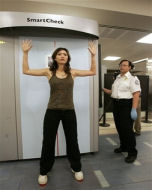
What’s Next--Muslim Only Lines at Airports?


Earl Ofari Hutchinson


Are Muslim only lines at airports next? The thought is offensive, disgusting, and blatantly unconstitutional. But it’s hardly far-fetched. Three years before suspected Nigerian airline terrorist Umar Farouk Abdulmutallab was hauled off a Northwest airlines flight from Amsterdam to Detroit with a powder and liquid explosive device stuffed in his underwear, British Department of Transportation officials openly discussed corralling men of Asian or Middle Eastern appearance at airports for intense questioning, checks and searches. The plan outraged Muslim leaders and British officials backed off the systematic profiling of Muslims. However, single men of Asian and Middle Eastern appearance were still subject to intense checks and searches. Britain was not alone. France and the Netherlands had already imposed de facto profiling of Muslim appearing young men and families at airports since the September, 2001 terror attacks. Polls showed that a substantial majority of Europeans agreed that racial profiling was not repugnant if it made airline travel safer and thwarted a possible terror attack. The clamor for a racial crackdown was first heard in the U.S. following the bombing of the Federal Building in Oklahoma City in 1996,

Then President Clinton and Attorney General Janet Reno had the good sense not rush to judgment and scapegoat Muslims. The swift arrest of Timothy McVeigh squelched the building mob hysteria against them. But it didn't squelch public suspicions that all Muslims were potential terrorists. The federal building bombing propelled Clinton's 1996 Antiterrorism Act through Congress. Civil rights and civil liberties groups had waged a protracted battle against the bill. The law gave the FBI broad power to infiltrate groups, quash fundraising by foreigners, monitor airline travel, and seize motel and hotel records and trash due process by permitting the admission of secret evidence to expel immigrants. The implication was that present and future attacks would likely be launched by those with an Arab name and face rather than by men like McVeigh.

President Bush, as Clinton, took the high ground after the 911 attack. He did not reflexively finger-point Muslims. The Bush administration publicly assured that profiling was reprehensible and violated legal and constitutional principles, and that it would not be done. But the attack stirred tremors among Muslims that they would routinely be targeted, subject to search and surveillance, and profiled at airports.

The profiling alarm bells went off again after a soldier with a Muslim name shot up the military base at Ft. Hood back in November. The Council on American-Islamic Relations wasted no time and issued a loud and vigorous denunciation of the mass killing. The Council didn't know at that moment whether Major Nidal Malik Hasan, the alleged shooter, was a Muslim by birth, a converted Muslim, or even a Muslim at all. The name and the horrific murder spree was enough to drive the group to quickly distance itself from the rampage. Other Muslim organizations instantly followed suit and issued their own equally strong disavowal of Hasan.

This didn’t stop the pack of Fox Network commentators, conservative radio talk show hosts, writers, and some officials from again openly shouting for even tighter scrutiny of Muslim groups. Terror suspect Abdulmutallab has simply raised the decibel level on their call for transportation officials to openly profile Muslims at airports, train stations, and even on the open highways.

Some elected officials have even jumped on the profiling bandwagon. Congressman Peter King, ranking Republican on the Homeland Security Committee, predictably loudly called for the profiling of Muslims. Brooklyn Assemblyman Dov Hikind went further and announced he’d reintroduce the bill he first introduced in 2005 to let police stop and search anyone they deem to be suspicious. Hikind didn’t specifically finger Muslims, but the intent of the bill was unmistakable, namely to target Muslims.

The New York Assembly will reject Hikind’s bill again. But the rejection isn’t likely to be unanimous. Legislators read the papers and the polls. Informal on line polls taken immediately after Abdulmutallab’s failed terror attempt found that a majority of Americans are ready to turn a blind eye to law, the constitution and just plain human decency to target Muslims, any Muslim, for special scrutiny. No matter that a potential terrorist can come in any shape, size, color, gender, and disguise. The Leadership Conference on Civil Rights noted that convicted terrorists John Walker Lindh were white, and Richard Reid was Jamaican and British. Abdulmutallab is Nigerian, but from all appearances he could just as easily be mistaken for a young African-American hip hop artist.

Broad-based ethnic profiling creates in turn panic and the false sense of security that airlines are actually preventing terrorist attacks. It also causes law enforcement resources to be squandered chasing the wrong targets. Worse, it’s a witch-hunt against a group based solely on their religion and ethnicity. This fuels even greater racial division, fear and hysteria. The public whispers and the right wing’s open talk of Muslim only airport lines do the same.

Earl Ofari Hutchinson is an author and political analyst. His forthcoming book, How Obama Governed: The Year of Crisis and Challenge (Middle Passage Press) will be released in January 2010.

Sunday, October 19, 2008

Colin Powell’s GOP Payback


Earl Ofari Hutchinson


Former Secretary of State Colin Powell’s endorsement of Democratic presidential contender Barack Obama was a mere formality. Powell pretty much hinted that Obama would get the nod from him when he repeatedly dropped glowing and admiring words about Obama over the past few months. Powell’s stated motive for breaking with GOP ranks and endorsing Obama is by now standard stuff. He’ll put a fresh, new, or as Powell called it “transformational” face on America’s much bruised and maligned foreign policy.
There’s no reason to doubt that Powell endorsed Obama for that reason. But in another sense his endorsement is a bitter sweet payback for the harsh, odd man out treatment he got from some within the Bush administration and from others in the GOP.
Despite his impeccable military credentials, unwavering party loyalty, towering prestige, and diplomatic savvy, Powell always stirred unease, even deep furor in the bowels of many conservative Republicans. They were never awestruck by the general's bars, commanding personality, and public popularity. That first surfaced when Powell made some soundings that he might seek the Republican presidential nomination in 1996. Pat Buchanan and a strong contingent of conservative groups were appalled.
They sternly warned that they would make "war" on him if he were really serious about grabbing the nomination. If Powell had ignored their threat and charged ahead in his bid for the party's nomination they would have pounded him for backing affirmative action and abortion rights. They would have dredged up the charge that he did not take Saddam Hussein out when he had the chance as chairman of the Joint Chief of Staffs during the Gulf War. The general got their message and quickly opted not to seek the nomination. As it turned out, they hammered him with the soft-on-Hussein charge anyway.
Even so, Reagan, Bush Sr., Gerald Ford, William Buckley and nearly every other Republican big wig were star struck enough with the general's magnetism and perceived popularity that they still wanted him on the Republican ticket. They remembered that in some opinion polls, Powell actually made it a horserace in a head to head contest with President Clinton. They figured that as the party's vice-presidential candidate he could breathe some life into the stillborn campaign of Republican presidential candidate Bob Dole in 1996 while not alienating the party's hard liners.
This was the stuff of delusion. If Powell had actually chosen to run he would have been under the most savage scrutiny of any candidate in American presidential history. The public and press on foreign and domestic policy issues would have mercilessly grilled him. Powell would have been forced to answer the same tough questions and face the same objections as the Republican vice-presidential candidate as he would have as a presidential candidate. And Republican hard rightists would have objected just as strongly to the prospect of Powell being one heartbeat away from the presidency.
The talk of Powell as Republican VP candidate fizzled just as fast as the talk of Powell as presidential candidate did. In 2000, Powell knew that the same Republican rightists still itched to pick a fight with him. He quickly scotched any talk about a Republican presidential candidacy. The Secretary of State post was a much better deal. It gave him a high political profile without the risk of stirring the rancor of the right. As a Bush cabinet nominee, rather than a presidential candidate, Powell would implement, not make, policy. This supposedly kept him out of political harm's way.
But this also proved to be the stuff of delusion. The battle within the Bush administration between Iraq war hawks Vice President Dick Cheney, Secretary of Defense, Donald Rumsfeld and National Security Advisor Condoleezza Rice over the war and the terrorism fight has been well-documented. Powell’s diplomacy first tact, his deep understanding that a unilateral too aggressive military policy posed the dire risk of a terrible blowback to U.S. security, and his personal inclinations that Saddam Hussein was largely an impotent, contained dictator who had absolutely nothing to do with the terrorism threat was anathema to the hardliners. They still demanded that he vigorously and enthusiastically help beat the administration's war-drum policy. It was a bitter pill for Powell to swallow, but swallow he did.
He dutifully put a respected face on Bush war doctrine. Even so, he was still closely watched for any hint of deviation from Bush's foreign policy line. This would have brought more howls from conservatives for the general’s head.
Powell survived but not without scars. The lies, deceptions, and staggering human cost of the Iraq war that Powell sadly shilled for tainted his legacy of admired, even revered public military and foreign policy service.

Powell’s Obama presidential endorsement then is much more than an endorsement. It’s a chance to buff a bit of the taint away as well as a nose thumb for past GOP scorn. Payback, if you will.

Earl Ofari Hutchinson is an author and political analyst. His new book is The Ethnic Presidency: How Race Decides the Race to the White House (Middle Passage Press, February 2008).